Legendary Service. Since 1974.SM
5-1/4" speakers
4 total items

Our articles and videos
How to shop for 5-1/4" Speakers
If your existing factory stereo sounds muddy and muffled, a new set of speakers can provide that extra crispness and detail you're missing. Crutchfield carries a wide variety of 5-1/4" car speakers. With so many choices available, it can be hard to know which ones to buy. Below, we'll cover the highlights to get you started, but for more guidance on what to look for when shopping, read our car speakers buying guide.
Finding speakers that fit
You'll quickly notice that every step of the way, we'll ask you to tell us about your car. That's because the best way to shop for speakers is to start by knowing which ones will actually fit in your car. This will also help narrow your search so you can focus on what's relevant for your vehicle.
Speakers come in one of two forms:
- Full-range speakers, the basic speaker. The tweeter and the woofer are mounted together in one body. These are also called "coaxials" or "2-way speakers." You'll also see 3-way and the occasional 4-way speakers that have an extra tweeter or midrange driver mounted on the same frame to help further separate the musical frequencies and deliver more detailed sound.
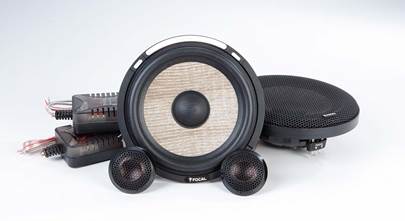
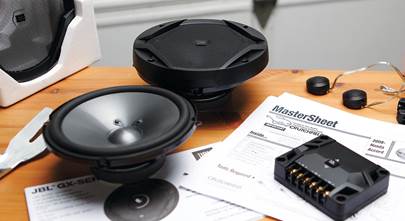
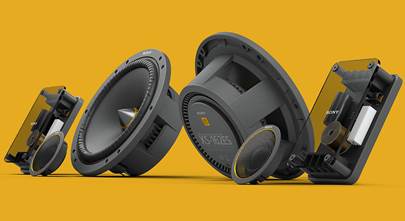
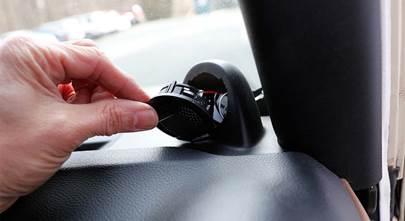
- Component speakers, also referred to as "separates." The tweeter and woofer are not mounted in the same basket. The woofer mounts in the lower door location, but you can mount the tweeter in a more optimal spot, usually higher on the door or on the dash. This helps to better direct the high-frequency sounds and dramatically improves how your music sounds.
Power handling – how much power do my speakers need?
Power handling is an important detail when shopping for new speakers. Speakers with a lower RMS power range will be more suitable for a factory or aftermarket stereo, while a higher RMS range will work better with an external amplifier.
If you want to use an external amplifier, you should pick an amp with a power rating in the upper end of your speaker's power range. For example, if a speaker is rated to handle up to 75 watts of RMS power, it will perform closer to optimum as your power source approaches delivery of 75 watts RMS.
Tweeter design
What the tweeters are made of dramatically impacts how they sound. Read our article about tweeter design for more details.
Efficiency rating
Efficiency ratings indicate how well the speaker uses power. If you're using a low-powered factory system, you'll want to choose a speaker with a higher efficiency rating (90 db and up). Low-efficiency speakers can sound great, but they'll need a high-powered receiver or amplifier to sound their best.
Popular questions customers ask
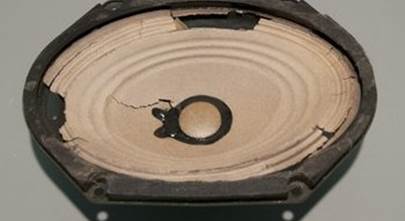
It's simple - you replace your car speakers because you want your music to sound better. Car makers cut corners when it comes to car speakers, and aftermarket speakers use better materials and superior construction to deliver improved sound. Replacing your old speakers is an inexpensive way to get better sound in your car.
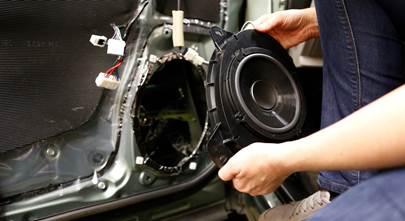
Replacing your car's speakers usually involves removing interior panels (doors, dash, rear dash, etc.), unbolting the factory speakers, using a bracket and wiring harness to install replacement speakers, and then reinstalling your panels. As a Crutchfield customer, you'll benefit from our free, vehicle-specific instructions, free wiring harnesses that eliminate splicing, and our friendly, toll-free technical support.
No! Speakers are sold in pairs, and it's common to replace your front speakers first, then later replace your rear speakers. It's a good idea to choose the same brand speakers for front and back, if possible. That way, the tone settings that sound good in the front seat will sound good in the back seat too. Of course, you can replace all your speakers at one time for the most dramatic improvement.
Like we said above, it depends on the RMS power rating of the speakers. Speakers with an upper range of 50 watts RMS or higher will definitely sound better powered by an external amplifier. If you intend to power them with your factory radio, then speakers with a lower RMS power rating and higher efficiency rating will sound best.
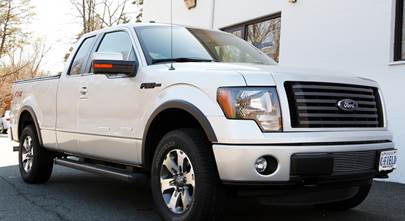
Cone size isn't the only factor in determining if a speaker fits your car. Sometimes speakers are too tall or too deep to fit your vehicle. In addition to measuring every speaker model we carry, we also measure thousands of vehicles. That's how we know that we're recommending the right stuff for your car or truck. If a speaker you're interested in isn't listed as fitting, give us a call. Sometimes minor modifications can make it work.