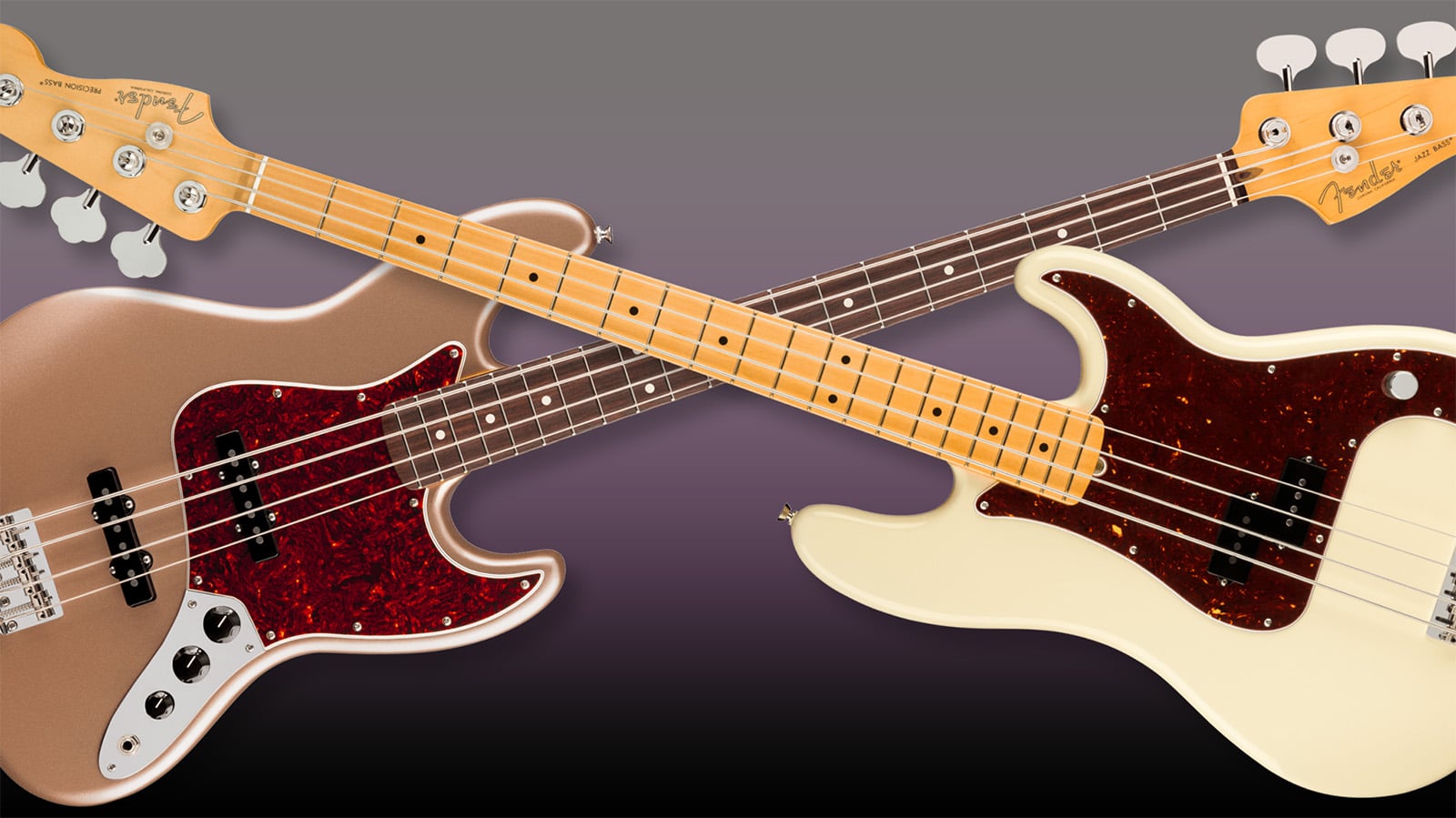
Fender Precision Bass vs Jazz Bass
How to choose between two of Fender's classic bass guitars

Every bassist has a story about a beloved Fender bass. My first successful band played a lot of soul, R&B, and Caribbean music, and I found it difficult to hear my early 70s Precision Bass over the two guitars and active horn section. I bought a 1965 Jazz Bass and suddenly my parts were punchier and clearer.
In my next band, I needed some serious low end to compete with a piano player who had a very active left hand. I found a 1956 P-Bass with a mammoth neck and a very hot single-coil pickup, which produced a huge sound that filled every corner of a club or concert venue and allowed me to hear my playing better.
Since then, I've owned an obscenely large number of Fender Precision and Jazz basses, and I've loved them all. I've also had scores of players ask me over the years "Which bass should I buy – the Jazz or the Precision?"
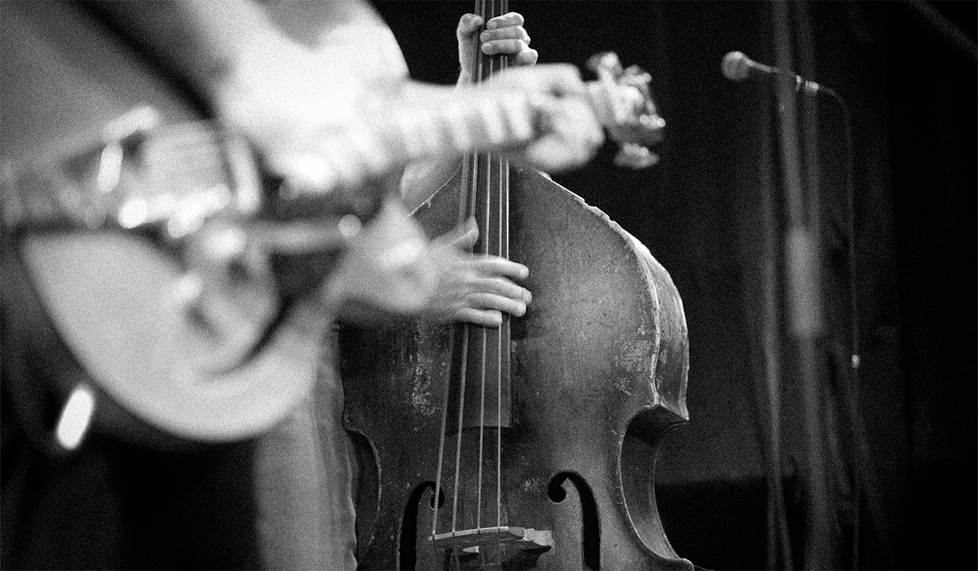
The dark ages
Bassists in the early 20th century were at a disadvantage. The acoustic (or "standup") bass was a large, cumbersome instrument that required careful handling and a larger vehicle. As hollow-body electric guitars were introduced into popular music, the bassist also found it harder and harder to hear his or her instrument. In late 1940s California, a radio repairman named Leo Fender had successfully introduced the first popular solid-body electric guitar, a Telecaster-style prototype, which was quickly snapped up by players in blues, jazz, and country-and-western bands. The bassists in those bands started asking "Hey, how about us?"
A game changer for popular music
In the beginning, Leo envisioned a solid-body electric bass. Instead of lugging around a large and fragile acoustic bass that took up a lot of space, you could throw this new electric bass and a small amplifier in any back seat and head off to your next gig.
The first Precision Bass sold in late 1951 had a large neck designed for players accustomed to the standup bass, along with a single coil pickup that was centrally located to produce a big, fat, crisp sound. Monk Montgomery (yes, Wes’ brother!) was one of the first to play this game-changing electric bass, and bassists everywhere who saw or heard his performances quickly acquired this new instrument.
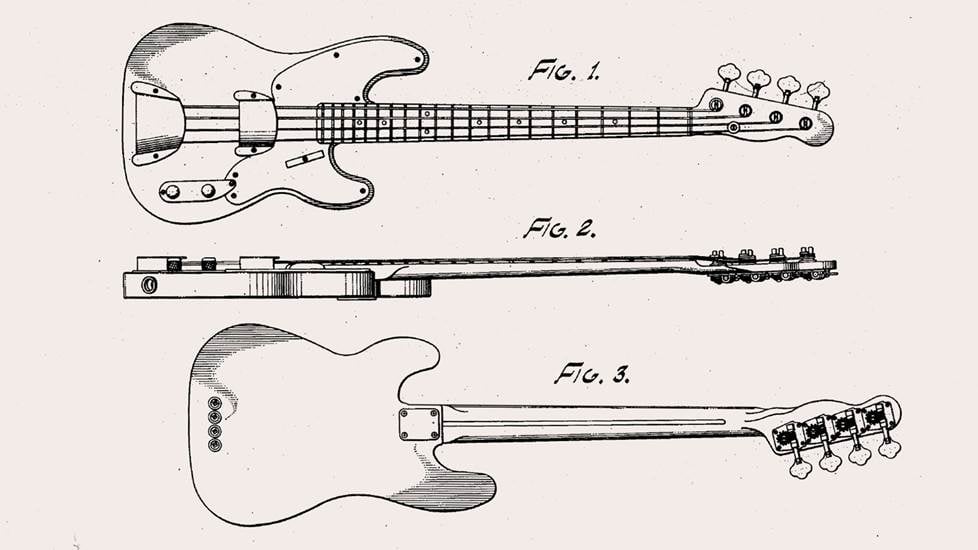
Check out Leo’s drawings for the original Precision Bass. Note the thumb rest on the wrong side of the strings, used by players who plucked the bass with their thumb.
During the first half of the decade, Leo received feedback from Precision owners all over the country. Many players complained about the electrical noise (also known as 60-cycle hum) generated by the single-coil pickup in certain venues. Musicians with smaller hands told Fender that the huge neck was uncomfortable. Many bassists sounded off that the flat body could get uncomfortable over the course of a long gig. Leo went back to the drawing board.
Changes to the Precision
In late 1954, Leo added body contours (a bevel to the front of the bass and a belly cut on the back) to make the body more comfortable when playing for extended periods. In 1957, the first modern Precision Bass was produced, featuring a smaller neck, a redesigned headstock, and an ingenious split single-coil pickup that delivered a supremely fat sound while eliminating the electrical buzz common in many venues. The new design was immediately successful and this version continues to this day without modification.
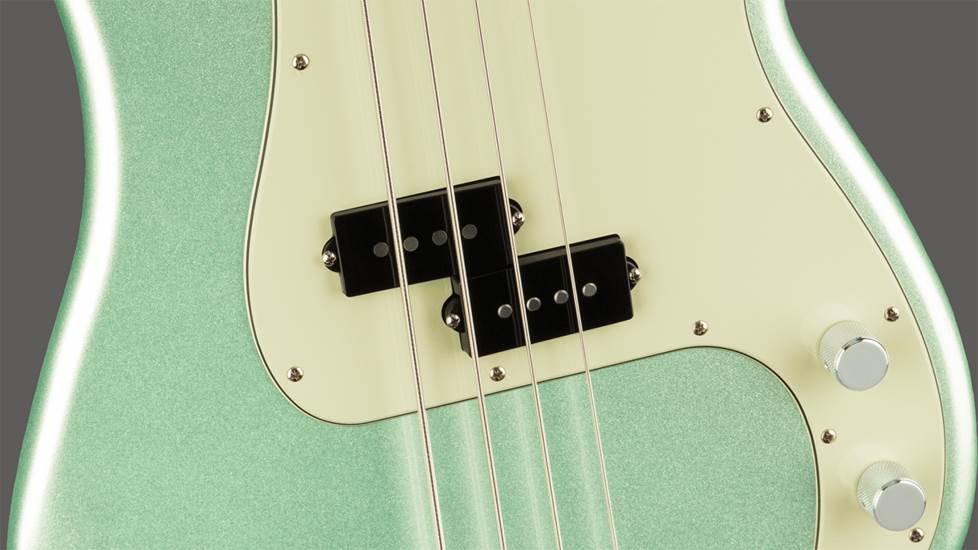
The modern Precision Bass with its ingenious noise-cancelling split pickup
The advent of the Jazz Bass
Meanwhile, many bass players and guitarists were asking for an instrument that was easier to play with more sonic versatility. Fender released their new Jazz Bass in 1960, which featured a neck that was narrower at the headstock and two pickups which could be controlled for a wider variety of sounds. This new model also gained immediate acceptance, and so started the debate which is the subject of this article.
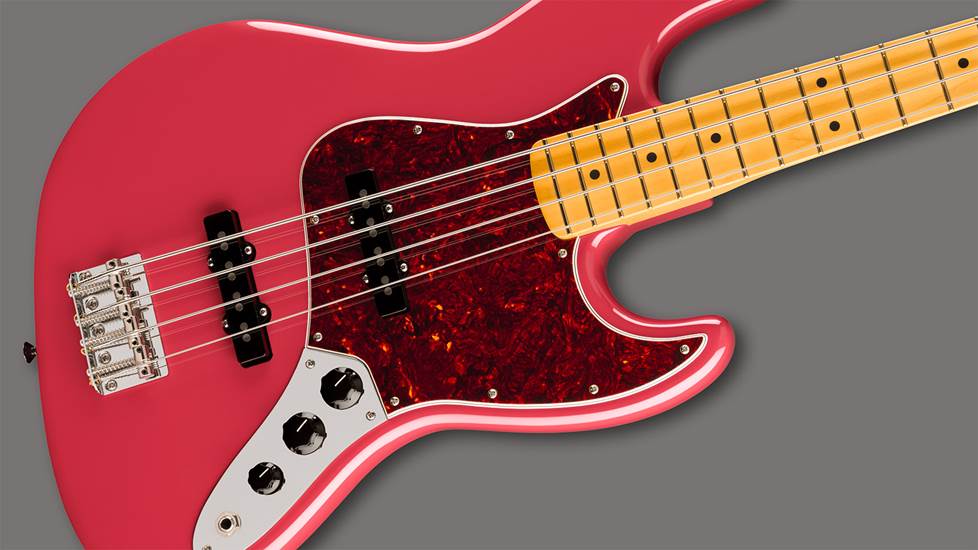
The Jazz Bass features a narrower neck and two single-coil pickups.
Should I choose a Jazz or Precision?
Customers often ask us which bass is right for them. You’ll find many variations of both basses available today, but for this article we’ll just concentrate on the traditional (and most popular) Precision and Jazz models.
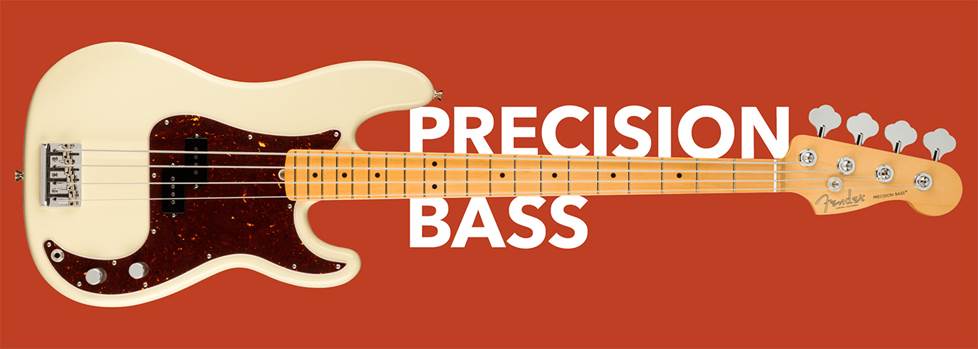
The Precision Bass
Fender’s Precision Bass offers the following advantages:
- A larger and wider neck
- A big, fat sound with plenty of bottom end
- No electrical buzz
For players who learned on an acoustic bass, the Precision’s wider 34" scale neck is like home. For beginners, starting on a 34" scale neck may present a slightly steeper learning curve, but it will pay off with the ability to navigate any electric bass in the future. The Precision's single pickup limits the tonal choices somewhat, but picking style, string type, and choice of amplifier make each bassist sound unique — the Precision will fit effortlessly into virtually any style of music.
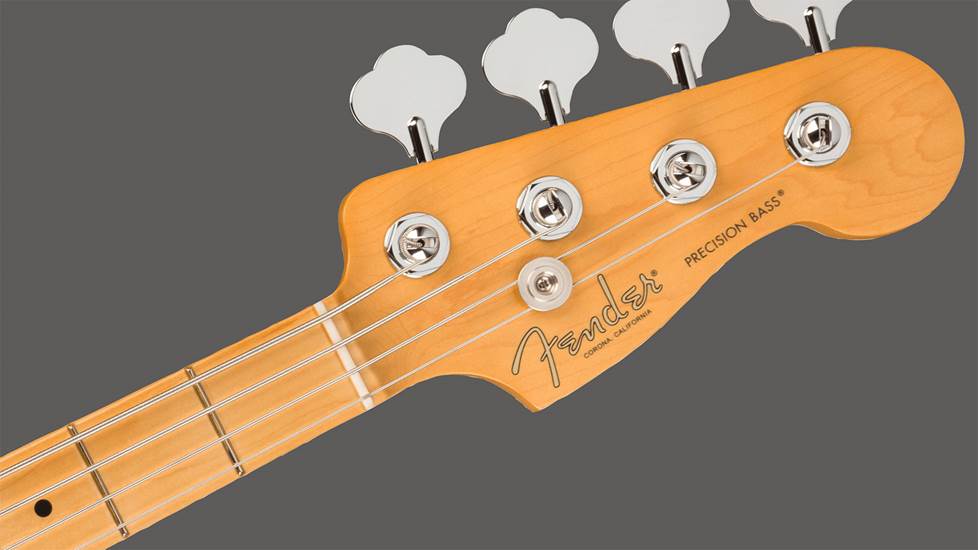
This Precision's maple fretboard produces a little snappier sound.
Most players will tell you that a maple fretboard gives you a little more high-frequency snap, while a rosewood board offers a slightly warmer sound. The elimination of 60-cycle hum by the split pickup is a huge benefit, particularly in venues with extensive lighting.
Tonal variety
And really, there’s plenty of tonal variety available — a Precision Bass with round-wound strings is a different animal from one outfitted with flat-wounds. The round-wound strings deliver a more aggressive rock’n’roll tone with lots of sustain, while flat-wound strings produce less sustain and brightness, a big plus when recording or trying to emulate the sound of standup bass. Playing with a pick gives you a brighter, more percussive attack, while your fingers deliver a rounder, warmer tone. Also, playing a Precision Bass down closer to the bridge adds definition to your playing, while picking closer to the neck adds more bottom end.
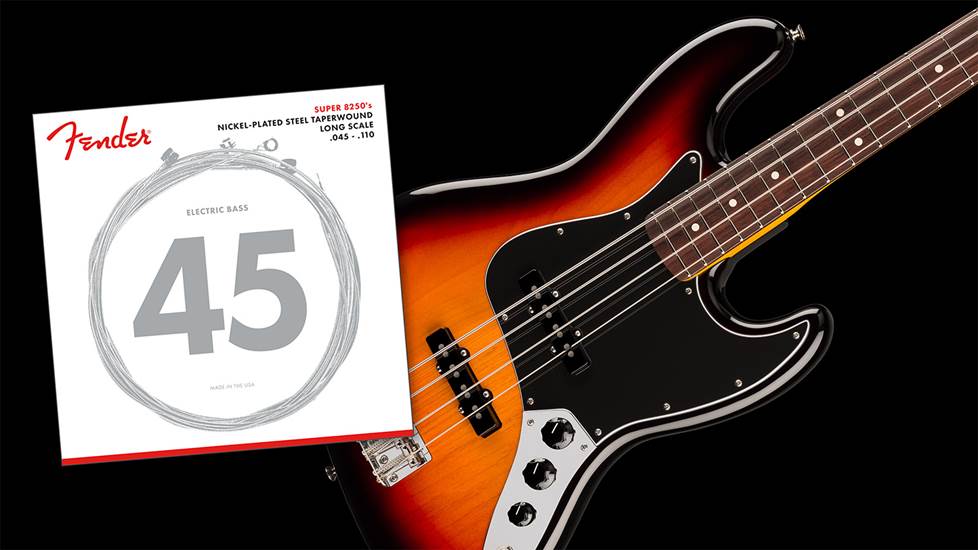
These Fender roundwound bass strings produce a bright, clear sound with plenty of sustain.
If you’re into blues, jazz, classic rock’n’roll, reggae, soul, or country, you’ll find that the Precision Bass fits these styles like a glove. The Precision Bass is all about “FAT,” and that’s why players like James Jamerson, Roger Waters, Suzi Quatro, Mike Dirnt, Paul McCartney, Carol Kaye, Steve Harris, and Duck Dunn chose this iconic instrument.
If you’re an experienced player considering a Fender bass for the first time, you’ll find that the Precision reacts more like a standup bass than most electric basses in that your finger placement and picking style determine the overall tone. And, if you’re an experienced player who's been playing a modern bass with active pickups and circuitry powered by a battery, you may be surprised at how beautifully the passive Precision pickup’s massive low-frequency punch fits in the onstage or studio mix.
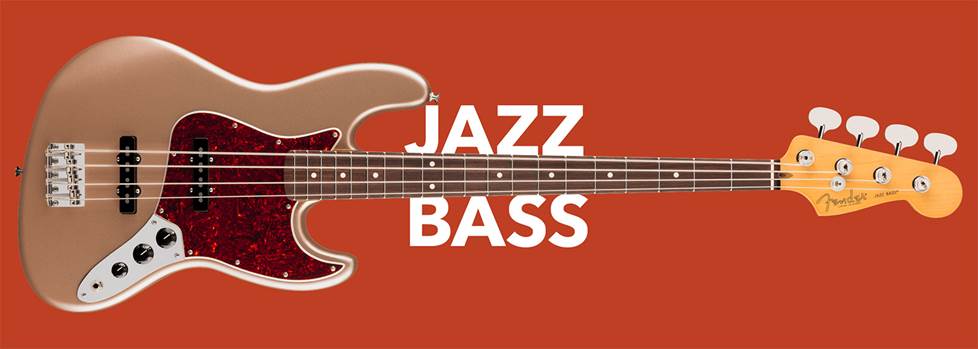
The Jazz Bass
The Jazz Bass offers these benefits:
- A narrower 34" scale neck that’s a little easier on smaller hands
- Two pickups for increased tonal versatility
- A tighter, more defined bass tone
The narrower nut width of the Jazz Bass neck appeals to many players with smaller hands, especially guitarists who are picking up the bass. The body features body contours similar to the Precision, so it's very comfortable to play for extended periods.
The two single-coil pickups cancel electrical hum when they’re both turned all the way up, but you may hear some buzz if you turn down one of the pickups to adjust your tone. With the neck pickup all the way up and the bridge pickup off, you’ll get a sound that’s reminiscent of the Precision Bass. Add in the bridge pickup and the sound gets much tighter and brighter, which appeals especially to bassists who slap. This versatility is especially effective when recording different styles of music, so most studio players keep a Jazz Bass in their arsenal.
Good company
If you’re a beginner, you may appreciate the narrower neck, especially if you have smaller hands. You’ll definitely go for the extra tonal options available on the Jazz Bass. Experiment with the volume control for each pickup, and you’ll see how the tone changes from darker to brighter and from fatter to thinner.
That sonic variety has allowed players like Geddy Lee, John Paul Jones, Esperanza Spalding, Adam Clayton, Flea, Larry Graham, Tim Commerford, Blu DeTiger, and Jaco Pastorius to make all kinds of musical magic with this versatile bass.
If you’re an experienced player, you know that the Jazz Bass gives you a very focused tone that really cuts through the mix onstage and through the PA system. And, if you play a lot of gigs, you’ll appreciate the comfort of that slightly narrower neck over time.
Which one is right for you?
It's hard to make general statements because each player's fingers react differently with an instrument, but here goes. In general, I've found that the Precision excels in smaller groups where there's lots of musical space to be filled, while the Jazz works best in larger bands where clarity is most important. When I was younger, I loved the bigger necks on Precision basses, but as I get older I've learned to appreciate the increased playability of a Jazz Bass neck.
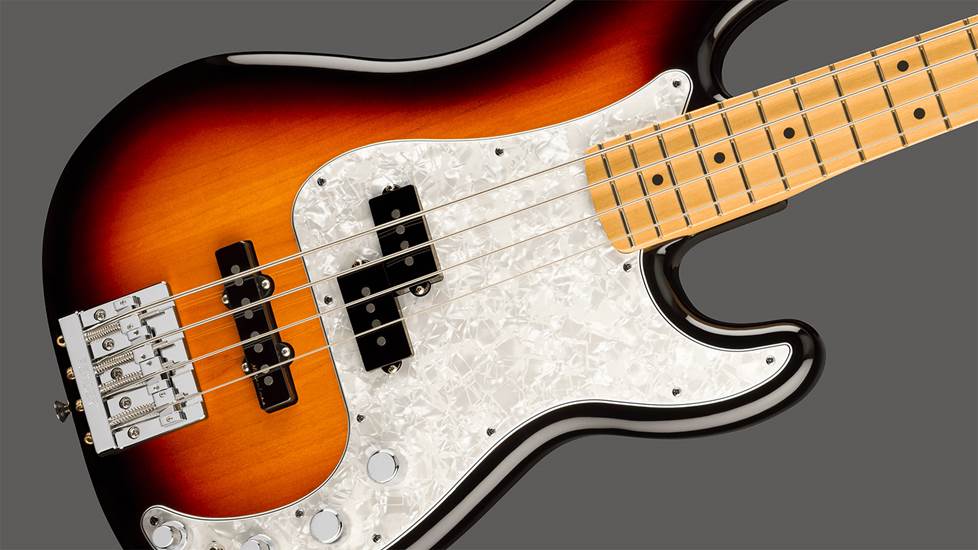
This hybrid bass features Precision and Jazz bass pickups, for more sonic variety.
Beginner or seasoned veteran, you can’t go wrong with either one of these Fender basses. And, with all the variations of these two basses that Fender offers, you’ll be able to find an instrument that fits your musical needs perfectly. No matter which type of music you play, Leo’s genius in designing these revolutionary instruments becomes more impressive as time goes by. Have some low-frequency fun out there!
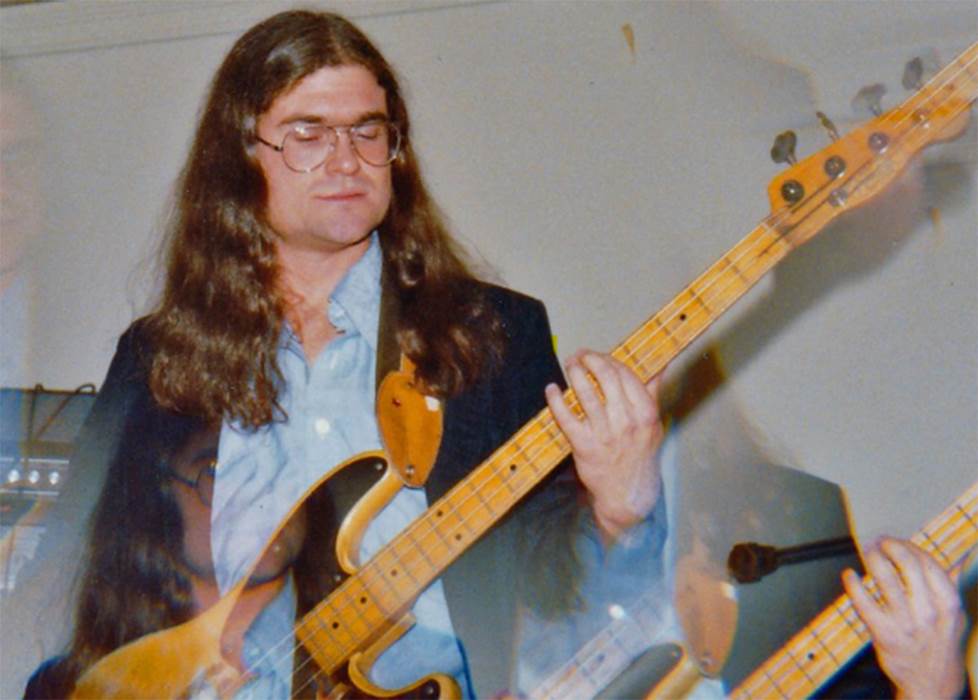
The author, circa 1979, with his 1956 Precision Bass that he wishes he never sold
Guitar insights from our experts
Want to dig a little deeper? Our music pros can help you choose the right bass and answer any questions you have about the different Precision and Jazz models, or about any other Fender gear we carry. Give one of our Fender Advisors a call at 1-800-315-0443 or contact us online. Free lifetime tech support is included with your Crutchfield purchase.

Mike Dyer from Crystal, MI
Posted on 8/25/2026
Great comparison article! I couldn't agree more!