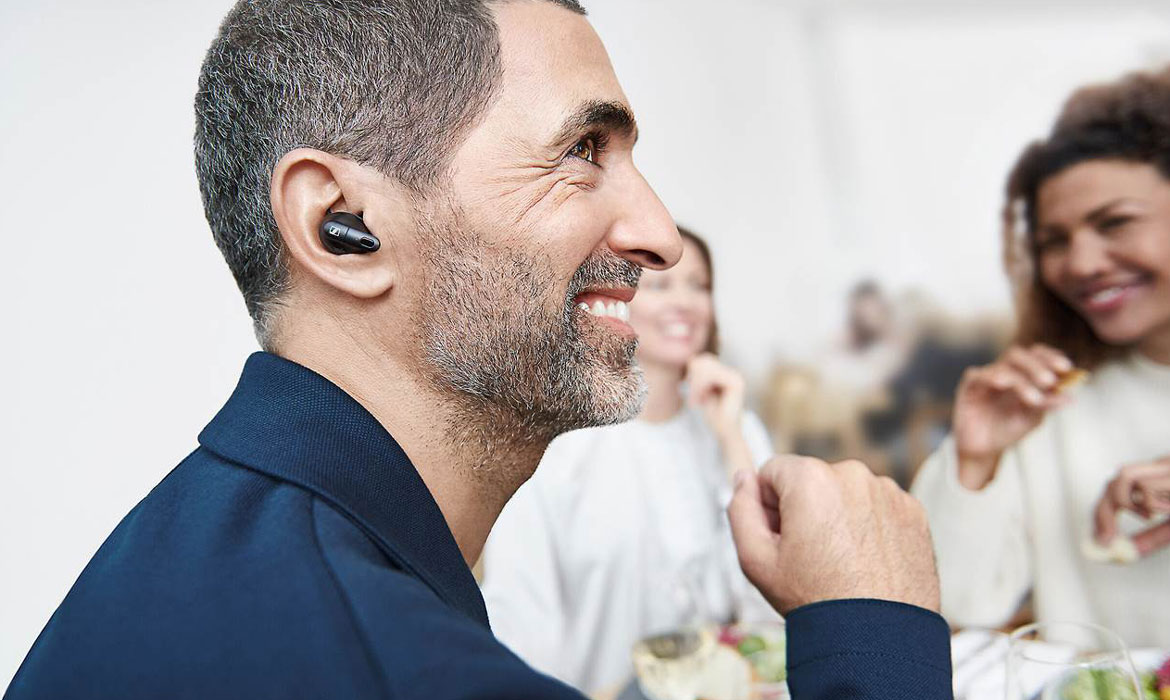
Guide to over-the-counter hearing aids and personal sound amplifiers
A deep dive into the world of hearing enhancement

Heads up!
Welcome to this article from the Crutchfield archives. Have fun reading it, but be aware that the information may be outdated and links may be broken.In this article: We’ll explain how hearing aids work and tell you what you need to know about over-the-counter hearing devices, including…
- Do over-the-counter hearing aids work?
- What does a personal amplifier do?
- Different fit styles
- Over-the-counter hearing aid options
...and we'll offer some suggestions on how to protect your hearing, along with some tips to help you choose the right hearing solution for you.
Hearing is a major part of our lives. It affects our ability to converse with colleagues, relatives, and friends. Your ears let you know whether a car is coming when you're out for a jog or if there's someone knocking at your door. Keeping your hearing in top-notch shape is critical, but it can be challenging.
Environmental factors that lead to hearing loss
A study done by the National Institute of Health that measured loudness levels on 99 different New York City streets gave a mean noise level of 73.4 dBA. That's more than enough to cause potential permanent damage to your hearing over time.
Other things that can harm your hearing include a lawnmower (at around 80-100dBA). Even headphones and earbuds, which can clock in at 100dBA or higher, can damage your hearing if you aren't careful with the volume level.
It's important to protect your ears whenever possible, as anything over 80dB can cause hearing damage.

You may think that everyday sounds aren't loud, but there's surprising evidence that says otherwise.
If you're one of the almost 14% of Americans that has some form of hearing loss, you may be looking for a way to improve your hearing. The cost of conventional hearing aids can be staggering — the prices range anywhere from $1,000 all the way up past $10,000. But there are more options available today than ever.
How do hearing aids work?
The first thing you might consider is going to an audiologist and getting prescription hearing aids. The cost can give you some major sticker shock, no doubt. But those aren't your only option.
Hearing aids work by amplifying the frequencies your ears have trouble hearing. Your audiologist tailors them to your specific hearing needs. But you can tweak the sound yourself if you have over-the-counter (OTC) hearing aids.
Do over-the-counter hearing aids work?
OTC hearing aids are a recent addition to the world of consumer electronics. The FDA ruled in 2022 that retailers can start selling approved models to customers without the need for a prescription. The ruling made hearing devices far more affordable.
OTC hearing aids don't require an audiogram (hearing test) or an appointment with an audiologist. They work almost like prescription hearing aids, analyzing the frequencies your ears struggle with and giving them a boost.
The models we carry are self-fitting, meaning they tune themselves. Almost all OTC hearing aids have a hearing test or assessment you need to take before you can customize their sound for your ears. In most cases, you'll do the assessment through an app, although some models have a web-based test that tells you which settings to choose.
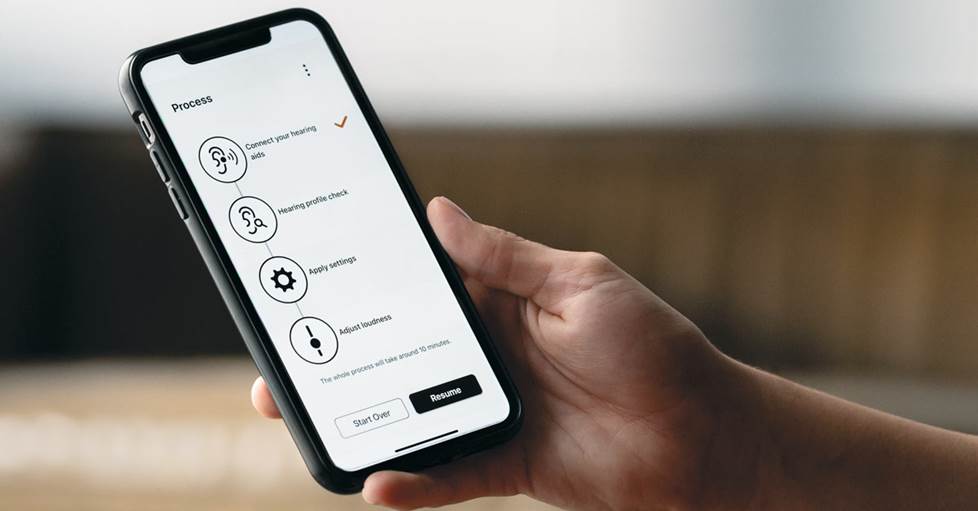
Over-the-counter hearing aids can tune themselves to amplify the specific frequencies you have trouble hearing. A quick hearing assessment is all you need to get started.
Once you're done, you'll have a pair of hearing aids personalized to your specific hearing needs. You can adjust them later if your hearing deteriorates further.
An important note on OTC hearing aids
OTC hearing aids are a solid option for folks with perceived mild-to-moderate hearing loss. But, it's always best to check with your physician or audiologist first to make sure there's nothing more serious going on with your hearing.
Also, please note that OTC hearing aids are for folks 18 and over and are not designed for children or teens.
I recommend seeing an audiologist if you struggle to hear loud sounds. Getting prescription hearing aids is the best bet if you have excessive hearing loss. I cannot stress enough that hearing loss of that severity requires prescription hearing aids.
Other features of over-the-counter hearing aids
OTC hearing aids work with either Android™ or iOS® smartphones and have apps available on each app store. On top of that, some models have Bluetooth® for music streaming and hands-free calling.
Keep in mind that the Bluetooth feature on some OTC hearing aids is Apple- or Android-specific. You can stream to them from one kind of phone but not the other. Make sure you get the model that's compatible with your smartphone.
Most OTC hearing aids are weather-and sweat-resistant and use special designs to keep water and dust out. All models come with an assortment of ear tips to ensure the best fit for your ears.
More advanced models offer some level of noise reduction that helps keep constant background noises out of focus. Speaking of focus, we carry a few models that have "focus modes". These models use the hearing aids' microphones to block out noise and focus on sounds the wearer wants to hear. This is great for keeping voices intelligible during conversations.
OTC hearing aids come in two different flavors: rechargeable and non-rechargeable. Rechargeable models come with a charging case and, in that regard, are like regular wireless earbuds. The case has its own internal battery, and the hearing aids sit in the case to charge back up.
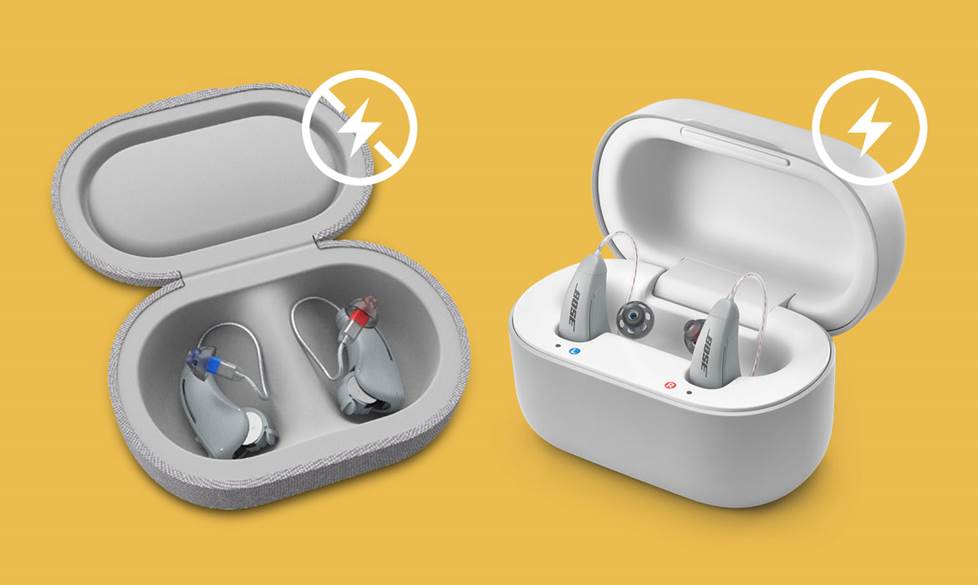
When shopping for OTC hearing aids, consider which type of battery is best for you — some have replaceable batteries while others have built-in rechargeable batteries.
The non-rechargeable options use replaceable batteries as their power source. You can expect to get several days' worth of use out of the batteries before they need replacing.
What does a personal amplifier do?
Another hearing solution is a pair of Personal Sound Amplifiers (PSAPs). These are sometimes called "sound amplifiers" or "personal hearing amplifiers". They work by amplifying all the sounds around you and can enhance speech.
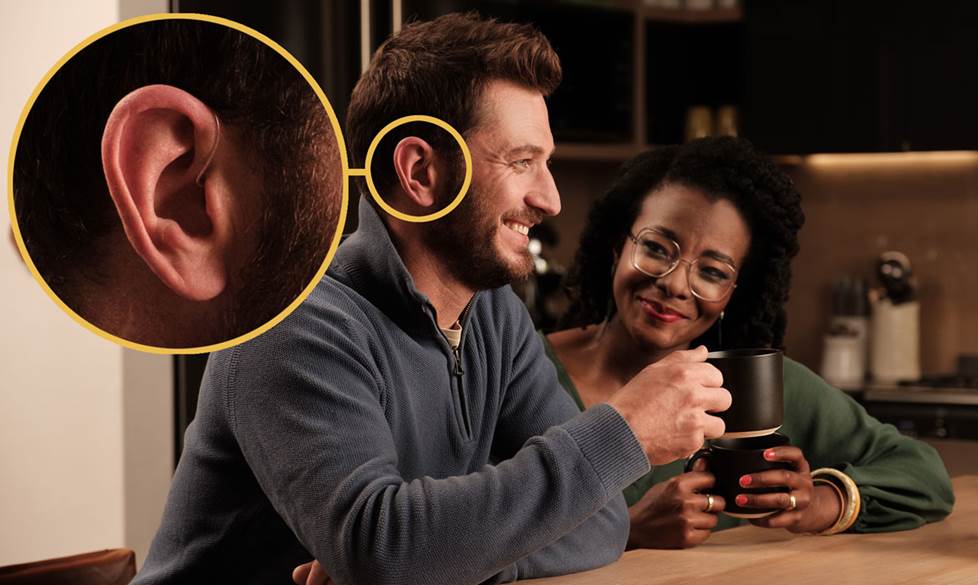
Personal sound amplifiers give you an overall volume boost. Some models fit discreetly behind your ear.
What's the difference between a hearing aid and a sound amplifier?
PSAPs are great in a pinch. Carry a pair with you while you're out and about and they can help keep you involved in spontaneous conversations that might spark up. They help keep you more aware in any environment. However, PSAPs aren't adjustable and can't be tailored to your specific hearing needs.
Over-the-counter hearing aids, on the other hand, are far more specialized and customizable. They target the frequencies your ears have trouble hearing and can be further adjusted as time goes on. While OTC hearing aids may cost more than PSAPs, they are a fantastic option for personalized hearing help.
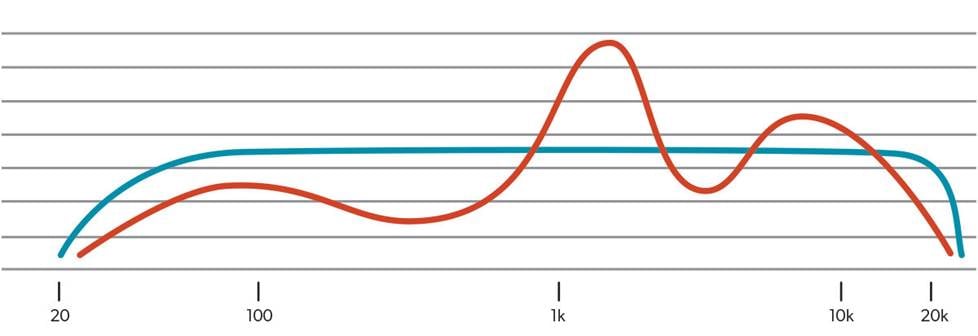
Personal sound amplifiers (blue line) have a flat frequency response, while self-fitting OTC hearing aids (red line) have a custom response that’s tailored to your hearing needs.
Not only that, but most OTC hearing aids also have some form of Bluetooth and app control, increasing their functionality in day-to-day life even more.
Are sound amplifiers as good as hearing aids?
This is a difficult question to answer. It depends on a lot of factors that are hard to squeeze into boxes.
If you think you have slight hearing loss, or just want to be more aware of your environment, PSAPs are a solid option. They can improve your hearing and keep you more engaged with the world.
However, if you think you have mild-to-moderate hearing loss, that's where things get sticky. PSAPs boost all frequencies, so they can help you hear the ones your ears struggle with, but they'll also make the sounds you hear just fine much louder.
With no ability to be fine-tuned, it's difficult to say how well they'll work for your needs. They work great as a backup to traditional or OTC hearing aids, but I don't believe they should be the primary hearing amplifier in your everyday life.
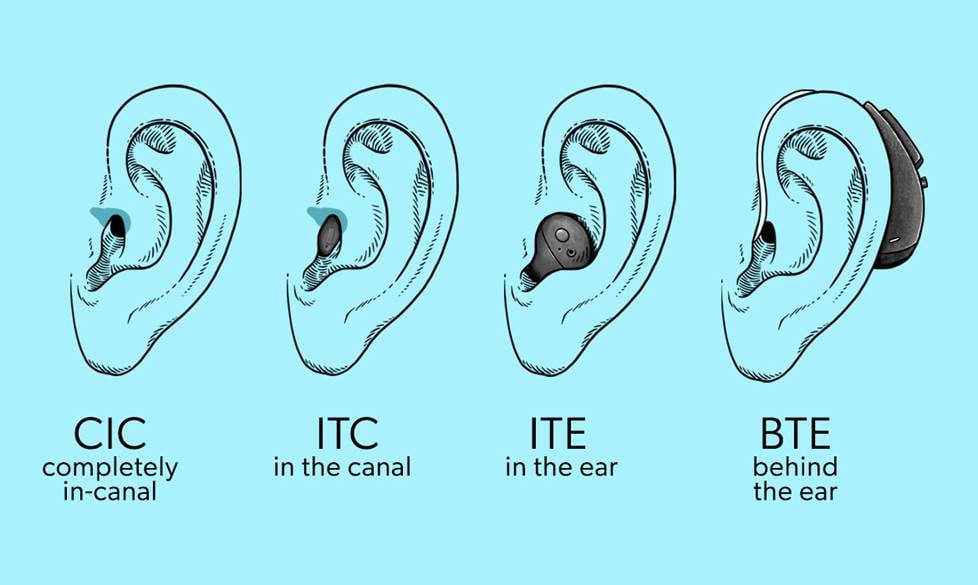
Different fit styles for OTC hearing aids
There are a few different fit styles in the world of OTC hearing aids. They are Completely In-Canal (CIC), In the Canal (ITC), In the Ear (ITE), and Behind the Ear (BTE). Each style has its own advantages and disadvantages.
CIC devices are the tiniest available. They rest entirely in your ear canal. This makes them almost invisible to outside viewers. However, their small form factor means they use small batteries, so they won't last as long as some other, larger models. On average, you'll get a few days out of them before the batteries need to be replaced.
ITC-style OTC hearing aids fit partially in your ear canal and are somewhat exposed. Despite this, ITCs are still incognito. Their batteries may last a little longer than CICs, but not much longer.
ITEs have an almost earbud-like appearance. Current models are sleek, and without closer inspection, one would think they were playing music rather than amplifying the world. ITE hearing aids are often rechargeable and come with a charging case, although some models still use replaceable batteries.
BTE hearing devices might look familiar, as they sport the design most of us associate with hearing aids. They are the largest OTC hearing aids, and as a result, they have the longest battery life. BTE models come in rechargeable and non-rechargeable flavors.
In a BTE-style hearing device, the receiver/processor and amplifier group sit behind your ear. Coming out from that module is a tube that loops over the top of your ear and terminates in an eartip that gets inserted into your ear canal.
What hearing solutions does Crutchfield offer?
Now that we’ve covered the differences and similarities between OTC hearing aids and personal sound amplifiers, let's explore some of the options we offer.
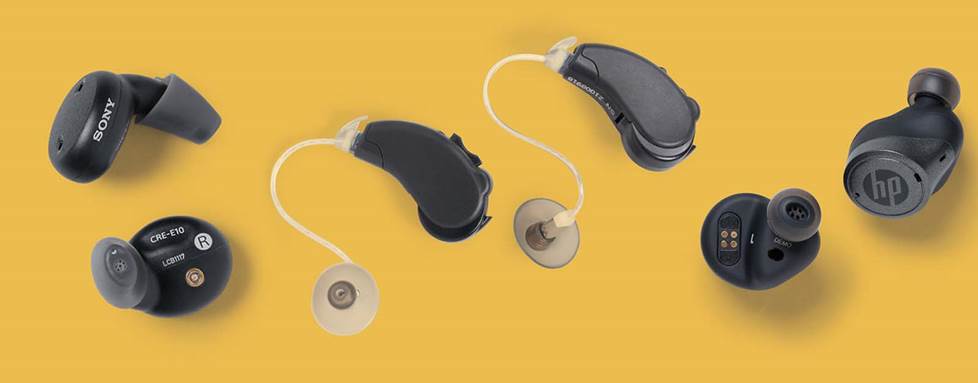
Over-the-counter hearing aid options
OTC hearing aids come in a few different flavors, but all of them have some things in common. They all have some sort of hearing assessment that needs to be done, whether through an app or through a web interface. And almost all of them have some sort of focus mode that rejects ambient noise.
Lucid Hearing Engage
The FDA-registered Engage comes in both a rechargeable and non-rechargeable flavor and works either with iPhones or Android smartphones. All variants work the same way and share the same technologies. Just make sure to grab the model that's compatible with your smartphone.
The Engage hearing aids require you to take a web-based hearing assessment to help you self-fit them to your ears. After you take the assessment, it will tell you which of the four available options to choose either on the hearing aids themselves (by using the onboard rocker switch) or on the Lucid Hearing app.
Details:
- high-performance hearing aids
- built-in Bluetooth for hands-free calling and music streaming
- proprietary nano-coating technology protects against splashes of water for added durability
- Lucid Hearing app gives you personalized control over the hearing aids' sound
Keep your ears safe from loud sounds
We've spent a lot of time discussing ways to correct your hearing. But what about ways to protect it? That's where hearing protection devices come in handy. We carry a few models designed to keep your ears safe when in loud environments.
If you're a musician, you may want to consider grabbing Etymotic Research's MusicPro Elite. They're rechargeable electronic earplugs that use high-sensitivity microphones to analyze the sounds in your environment. You'll hear naturally, but once sounds get to be over 90dB, the MusicPro Elites attenuate the sound back down to a level safe for your ears.
Or if you're into firearms and sport shooting like me, you can grab a pair of the Etymotic Research GunSport Pros. These battery-powered electronic earplugs work like the MusicPro Elites, in that you can hear naturally with them in and that they attenuate unsafe sounds back to a tolerable and safe level. Having tested them myself during a range day, I can attest that they work like a charm.
The last option is for those who work around heavy machinery or other loud noises. The Saf-T-Ears ProPower+ work in a similar fashion to the other two above and have two selectable hearing protection modes. They're also rechargeable and come with a durable, water-resistant case.
Which hearing solution should you go with?
We've covered about everything, and at this point, you may be wondering how to choose the right hearing solution for your needs. If, after consulting with your physician, you're considering going with either a PSAP or a pair of OTC hearing aids, reflect on what you're having trouble hearing and when that trouble arises.
If you need hearing help during conversations in loud places, a PSAP may be the way to go. However, if you struggle to stay engaged in conversations in quiet places, OTC hearing aids may be the best solution.
If you're looking for customizability, then OTC hearing aids are unbeatable. They can be tailored to your ears now, and further adjusted later down the line. That's a feature that PSAPs lack.
It's also worth considering what else you'll need alongside your hearing aids or PSAP. We offer additional ear tips for the Sony CRE-C10 and CRE-E10.
Need further help?
There are tons of options available to folks with hearing issues. If you'd like to discuss those options with someone, feel free to reach out to one of our Advisors for personalized one-on-one advice. Also, all Crutchfield purchases come with a generous 60-day return period and free lifetime technical support.

Bill Hiemer from Elizabeth City, NC
Posted on 7/2/2023
Great explanation of these new OTC hearing aids. Easy to understand, while providing extremely helpful information. Thank you!
Archer A. from Crutchfield
on 10/17/2023
Dale from St John
Posted on 6/22/2023
Excellent. Thank you.
Archer A. from Crutchfield
on 10/17/2023
george from NYC
Posted on 6/22/2023
this was really helpful
Archer A. from Crutchfield
on 10/17/2023
John from Chandler
Posted on 6/21/2023
I tried many, but all produced terrible intermodulation distortion when playing the piano, so I take them off for playing music. At a classical music concert I am constantly adjusting the gain to avoid distortion. Are there any that do well for live music?
Archer A. from Crutchfield
on 6/22/2023
Patrick from San Francisco
Posted on 6/21/2023
Thanks for all the hearing aids ,but do they make bonecondutive hears aids like ,after- shokz, that have built in receiver, with out another box to hear for hearing impaired? Million dollar idea ,dont forget whom gave you the idea?. Thanks
Archer A. from Crutchfield
on 6/22/2023