Podcast Ep 72: Car speaker placement tips
How to get the most out of your new car speakers: Baffles, sound deadening, and installation tips

In this episode:
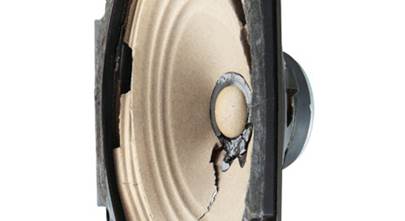
You bought new car speakers — now what? JR and Huffy welcome Peter, a Crutchfield merchandising veteran and former sales trainer, to talk about getting your speakers to live up to their potential. The guys tackle one of car audio's most misunderstood products — speaker baffles — and set the record straight on what they actually do, when you need them, and when you might want to grab a knife to make a small modification. From there, it's on to Fast Rings, sound deadening (Dynamat, Hushmat, SoundSkins — a little goes a long way), and installation tips that apply whether you're swapping a blown factory speaker or building a serious upgrade.
Think of it as all the stuff nobody tells you the first time you tackle a car speaker install — but absolutely should. Got questions about baffles, sound deadening, or anything car speaker related? Email the team at [email protected]. And if you want to get ahead of next month's episode — all about making your?home?speakers sound their best — send those questions in too.
(0:00) So here's a piece of metal without any dynamat on it. Here's what it sounds like. (0:05) And here's the exact same size coin made of the exact same metal with a tiny little bit (0:10) of dynamat on it.
Wow. Hello and welcome to Crutchfield the podcast. I'm your host (0:24) JR and I am joined in studio today not by just Huffy but by two people.
Huffy, (0:31) first. How you doing Huffy? I'm doing great. Just Huffy.
I don't know that I've ever heard (0:35) myself referred in that way. I don't know if I love it. It's my preferred way to refer to you.
(0:39) Just Huffy. It's not just Huffy. Good news.
It's not just Huffy. No, we have Peter with us today. (0:46) Hey, yeah, we do.
And the reason we have Peter with us is because he's in our merchandising (0:52) department. He used to be in sales. In fact, he and I went through training together back in 1996.
(0:57) He actually trained me on products once I came here to Crutchfield. Former sales trainer. Yeah, (1:03) Peter.
He knows a thing or two about this stuff. And we brought him in because the topic of today's (1:10) show is all about making your new car speakers sound as good as they can. We're going to talk (1:18) about all of the things you can do when installing speakers, whether they're just simple OEM (1:24) replacements because your factory speakers are making fart noises or you're doing a serious (1:30) upgrade with separate components and amps and DSPs and stuff like that.
The stuff we'll be (1:35) talking about today applies to any speaker going into any factory location. And what we're not (1:41) going to get into is all of that extra stuff like DSPs and amplifiers and new radios. All of that (1:47) stuff will, of course, make your speakers sound better, but we're talking about just the speaker (1:52) specific installation stuff that you can do.
And we want to hopefully correct some (2:00) misperceptions out there about what some of these products that help speaker installations do, (2:05) because I've seen YouTube videos about speaker baffles, for example, and Dynamat and things like (2:13) that, where people don't necessarily fully understand the purpose of these products and (2:17) what they're going to do for them. And so we want to make sure your expectations are correct, (2:23) and that you get the products you actually need to do the job you need done. (2:27) And I think that's really the crucial thing that you mentioned is that, you know, you're buying (2:30) new speakers because you want better sound.
But this is not something folks do all the time, (2:35) right? And so there's a lot of other, there's confusion, there's misconceptions, there's, (2:39) I just didn't know, there's a lot of things that you can do beyond buying an upgraded pair of (2:44) that will get you better performance and better sound. So I think that's what we're going to talk (2:48) about today. Yep.
And we've sort of focused it on, we're going to have three kind of different (2:52) segments of the show today. The first one, it's going to be all about like speaker baffles, (2:57) mainly because they are in many cases seriously misunderstood, but a very valuable piece in making (3:04) many speakers install better. We'll talk about some baffle adjacent products like fast rings.
(3:13) We'll also get into sound damping. Is it damping or dampening? I have the answer. (3:19) Products that will help reduce vibrations and stuff in your car, in your doors, (3:24) and just some general installation tips that if you follow these, you'll generally have better (3:29) results than if you don't follow these.
So that's it. Now we got three segments, (3:34) and we're going to get right into baffles. Baffles.
We've been carrying them longer than (3:42) I've been here. So at least 30 years, maybe longer. For a long time, it was one brand.
It (3:46) was XTC. We now carry multiple brands like XTC and boom mat. Yep.
Peter, you're the guy (3:53) that buys our baffles. What is the general purpose of a baffle? Like why do they exist? (3:59) You know, so far I'm waiting for Huffy to pipe in with how baffled he is about this whole topic, (4:05) but he hasn't said it yet. Did I just take that away from you? I'm sorry.
Did I steal that from (4:09) you? Now I don't know what I'm going to add to the middle of this conversation. This is not (4:13) getting edited out. You stealing the first pun from Huffy is amazing.
Heck. You know, so yeah, (4:19) baffles have been around a long time, and I think the purpose of it, they have a lot of (4:24) different functions and, you know, why would you use a baffle? So, you know, a long time ago, (4:30) one of the initial reasons to use a baffle was to get a better seal in the door, right? So early on (4:37) when the, you know, speakers were going into doors, they weren't always a perfect fit. And (4:41) sometimes there was a small little air gap, you know, between the door and the speaker.
And as (4:46) we all know, you know, speakers are designed for the sound coming out of the front of the speakers (4:51) to not interrupt with the sound coming from the back of the speaker because it can cause (4:54) cancellation, i.e. little or no bass response. Yeah. So one of the initial reasons was to have (4:59) a really good seal.
So when you put the, you know, and if folks don't know, a baffle is sort of like a (5:04) foam sort of cup that goes into the door that, you know, the speaker sits in, the back of the (5:10) speaker goes into this cup, and it has sort of a flanger ring around the outside that you would (5:15) screw through the door. And again, sort of one of the initial ideas was to create that good seal (5:21) between the front and the back of the speaker so you can get all the performance that, you know, (5:25) you would want to. Another reason in older cars is, hey, they weren't as waterproof as some modern (5:31) cars.
And so there was some water leakage between the window. So moisture would get down between the (5:35) door and the window. And, you know, there's a paper speaker back there and some magnetics and (5:41) some electronics.
And some of that moisture would get back there and affect the speaker and potentially (5:45) affect the longevity of it. So initially, it was to provide a good seal when you install the speaker (5:51) and also to protect the back of the speaker from elements inside, you know, a door that wasn't (5:56) completely weathertight. Yeah.
So they're generally billed as waterproof foam cups. (6:02) Yeah, exactly. You know, they're not the only way to do some of those things.
You can use foam tape. (6:07) You can use fast rings to make a good seal around the edge. Baffles have that added layer of (6:13) protecting your speaker from the elements, which, yeah, I think, as you mentioned, it's kind of an (6:17) older car problem.
Yeah. And I know that still today that for several older vehicles, we still (6:22) recommend a baffle as sort of the installation ring, because, again, the size of that opening (6:28) and the size of, you know, traditional car speakers, it just doesn't fit exactly right. So, (6:34) you know, I can't think of a car off the top of my head, sadly.
But there are cars where we say, (6:39) hey, if you want to put this speaker in this car, we recommend you use this baffle for the ultimate, (6:44) you know, install. To get really deep into the weeds on that for just a few seconds. Yes.
(6:48) If the gap, if we are aware that there's going to be a gap, but it's a really, really tiny little (6:54) gap, we will recommend a speaker installation kit that we have put together with one of our (6:59) partners, Metra. It's five bucks with a pair of speakers, and it includes some pretty thin (7:04) foam tape to make that seal. If the gap is bigger than that foam tape can deal with, (7:10) we will recommend a baffle.
Yes. That is how our system works. So there are instances when you (7:17) will see baffles strongly suggested as part of the package of stuff you need when you buy a pair (7:22) of speakers.
Your sales advisor, if you call or chat and talk with somebody, they will tell you (7:27) you need baffles in those instances, and it's to make that seal around the edge. So there are cars (7:33) and speaker installations. We know they really do help.
Every other time, they're kind of optional. (7:40) It is up to you if you should put them in there or not. And I can't emphasize enough, (7:44) the reason that we don't want that gap is because it can kill bass response.
(7:49) Yeah. You mean you're replacing speakers to get better sound, and this is a way that you will (7:53) lose performance. Again, whether you're buying the least expensive speaker available or the (7:58) most expensive, you're going to lose performance if there's a gap and you don't fix it.
(8:04) So we've kind of covered the purpose of baffles, but there is an issue with baffles that we need (8:10) to get to the bottom of. Will baffles give you more bass or less bass? This has been debated. (8:18) It has been disagreed upon time and time again.
I'm going to add to that, will it give you better (8:24) sound, right? So I mean, ultimately, you're using these things, so you're buying new speakers, (8:29) you're installing them because you want better sound. So will using baffles give me better sound, (8:34) or there is a very common misconception that using baffles will give me less better sound, (8:43) i.e. less bass response. So I think we definitely need to talk about that.
(8:47) So sealing the gap, if the baffle does that job, that will improve the bass performance. But (8:53) the speaker, if you don't do anything else, your speaker is sitting in a waterproof, almost (9:01) airtight container or enclosure, if you will, right? And your speakers are generally, you know, (9:09) six and a half, six by nines, these types of full-range speakers are generally designed to (9:13) kind of be free air, which is a term we throw around with subwoofers a lot. We don't really (9:18) think of it with these types of speakers, but all that means is that the front of the speaker, (9:22) sealed off from the back of the speaker, and if you don't seal it off, you lose bass.
(9:26) But that also means that if you put a free air speaker into a tiny little enclosure, (9:33) which a baffle can be, you might suffocate that speaker. You might keep it from being able to (9:39) extend in and out as far as it needs to, to make that bass because it's pushing and pulling against (9:46) that sealed air chamber that is created by the use of a baffle. Yeah, this is where a lot of (9:51) folks get confused.
Is it going to give me better sound or not better sound? So, you know, (9:57) some of the things that we have seen is obviously you have to cut a small hole in the back of the (10:03) baffle simply to put the speaker wire in there. That speaker wire comes from the back of the, (10:07) you know, the door or wherever you want to get to the, you know, the terminals at the back of (10:12) the speaker. So you at least have to cut a little tiny hole to put the speaker wires through there.
(10:18) Now, so is that it? Should you leave it like that? Or, you know, we've talked about it before. (10:23) Should we make a bigger hole in that baffle to, you know, to get better performance? I'm kind of (10:30) in this school of thought. This is kind of where I go on about baffles are great.
Baffles help seal (10:34) the gap, you know, between the speakers to help you get better bass response. Baffles also help (10:39) protect the back of the speaker from, you know, from the elements and water and moisture getting (10:43) through the door. However, they do have the potential to limit the performance of the speaker (10:49) moving back and forth.
So kind of what I've always done in my installs is I kind of cut out (10:54) the bottom of the baffle. So it still has the seal, it still has the protection, but the, you (10:59) know, it allows the speaker to do its thing, to move in and out, to breathe freely, and most (11:04) importantly, not potentially limit bass response. Here's the thing.
Every speaker and factory speaker (11:12) location combination can be different, right? So there is no universal answer for will it improve (11:19) your bass? Will it not improve your bass? Will it make your bass be worse? Do you need to port it? (11:24) The answer, you may not know until you install your speakers in your door with your baffles. (11:30) And if you do that and you test it before you put your door all back together (11:36) and listen and go, huh, I don't think there's as much bass as there should be or that there was (11:40) before, then you might be in a case where you should port your baffle or cut that bottom out, (11:47) as Peter suggested. And if you look through the reviews on baffles, you'll see it's all over the (11:51) place.
Some people are like, these sound great, make my speakers much better, more bass, and (11:55) other peoples are like, no, my speakers sound quieter and I don't have any bass. That's because (12:00) you got to really think about this when you do it. You don't just put them in and forget about it.
(12:04) Put them in, test them, see if you need to port them at all. Boommat is a brand of baffles that (12:12) the name kind of implies you're going to get more boom, but it's just not that simple, (12:18) as we've just discussed. Well, that name implies they make other sound deadening (12:23) products that match, that limit the boom.
So that's where the name Boommat came from. So (12:29) that happens to be just with the brand, not particularly with the product. So yeah, (12:33) I think there is the confusion of like, I'm buying this Boommat product, so it's going to (12:36) make things go boom.
Well, that's not exactly what it's for though. (12:40) Yeah. For the first few years of my 30 years, I was under the impression that, hey, you put (12:45) baffles in, you make your speakers sound better.
And I did treat it as if it was that simple. (12:49) Thankfully, those days are behind me. We as a company have made sure to try to set those (12:55) expectations properly on our web pages for baffles and all of that.
Huffy, did you have a story about (13:02) selling baffles back in your retail days? Well, yeah, of course. One day we were working, (13:09) picture young Huffy over at the retail store here in Charlottesville, Virginia. We had a wall (13:14) of speakers in our car room.
So just a wall of six and a half inch speakers in this one particular (13:19) room. Yeah. So we could compare quickly between different manufacturers.
So we needed to swap (13:26) out some speakers. So I was like, you know what, I'm going to go ahead and add baffles to this. (13:29) Why wouldn't I? So I started, uh, you know, one half of the wall, I put baffles and I thought it'd (13:35) be really interesting kind of a B test to be able to go back and forth and just fade it because I (13:42) had like all the left speakers with baffles and none of the right ones.
So it'd fade back and (13:46) forth and quickly realized I've minimized the amount of airspace. Those speakers had to work (13:51) with on one side, they were able to fully extend without that extra pressure. And then on the other (13:57) side where the baffles were, uh, they weren't.
So, you know, looking back, what I should have (14:03) done was in that installation, because I didn't have to worry about moisture or any kind of (14:08) environmental issues, left the baffles up, but just cut the back of them off. Or, I mean, (14:13) were baffles even needed, right? Did you need to seal a gap around the edge where there was not a (14:19) waterproofing concern you, you were thinking baffles would help make them sound better. (14:25) They didn't.
And in retrospect, that's not really a situation where baffles are needed. (14:30) No, not at all. (14:31) Really to paraphrase to baffle or not to baffle.
(14:34) That is the question. (14:35) Indeed it is. Bingo.
And it's a very inexpensive experiment to try, (14:40) right? To put those baffles in. We're not talking a hundred dollars. We're talking like (14:44) 10 to 20 bucks, somewhere in that range, depending on the size baffle you need.
(14:48) So it's a pretty inexpensive tip to make your speakers sound the way you want them to. (14:54) It's just not as simple as put them in though. There's a baffle-adjacent product called Fast (15:00) Rings that we should talk about.
These are three foam rings that can be used. Each of the pieces (15:09) are to do a different job in the job of installing new speakers, right? So the centerpiece is just (15:19) like a foam disc that you kind of stick on the inside of the body panel of your doors, (15:27) like behind the speaker. (15:29) Well, so really, you know, speakers, you know, sound comes from the front of the speaker, (15:33) but also the exact same sound or pretty much the same sound is radiating backwards off the (15:38) back of the speaker.
So sound goes, moves front, but it also radiates toward the back. (15:41) Now in a really tight installation location, like a door, those vibrations, you know, (15:47) that sound coming off the back of the speaker can hit the door panel, the outside skin of the door, (15:53) and then create these undesired reflections. So it can take those vibrations, hit the door panel, (15:59) and shoot them back to the speaker, which can cause cancellation, which is called (16:03) destructive interference, if you want to get really fancy.
(16:06) It's so fancy, I like that. (16:07) So, you know, the sound coming off the back of the speakers hits the inside of the door, (16:11) it bounces back, and bumps up against the sound that you do want, again, mostly killing (16:16) bass response. So this is a bad thing.
So by putting that big foam center part of the ring (16:22) behind the speaker, it helps kind of absorb and deflect that back wave energy so it doesn't (16:28) reflect back to the speaker and potentially affect the performance. (16:33) The second part of fast rings is basically that ring that does the job we've been discussing (16:38) for the last 10 minutes of sealing the gap between the speaker and the potentially uneven (16:45) surface of your door metal. So one ring is just basically some thick foam that kind of compresses (16:50) between the speaker and the door to seal that gap.
(16:54) Seal the deal. (16:55) We don't need to rehash that. That's important.
You should do that. (16:59) There's a third ring in the fast rings assortment that kind of goes between the front of the (17:05) outsider of the frame of the speaker and the underside of your door panel that covers your (17:12) speaker where your factory speaker grill is. And that is kind of there to help just not lose any (17:19) sound inside your door between your door panel and the metal of your door to really focus the (17:26) sound out of the speaker and into the passenger compartment where you and your ear holes are.
(17:31) So these are another great little simple tool to get all the performance that you paid for. (17:37) What I like about that, the baffle does some of those things as well, but that product, (17:45) when installed, it's not going to suffocate the bass. You don't have to do any alterations.
(17:50) You don't have to go back. When installed, the bass wave itself is still going to have (17:55) all that airspace it needs to create the bass wave, but you're still controlling those other (17:59) variables that can decrease bass or add noise. So yeah, that's a wonderful product.
(18:05) Also, the fast rings do not offer any waterproof or protection or anything like that. So that's (18:11) a different application slightly. So they're very baffle adjacent, as I said.
(18:19) All right, we're going to move on. That's enough baffle talk. I want to talk more about (18:26) sound damping.
And is it damping or is it dampening? (18:30) Depends on if it's a marine speaker or not, right? (18:34) Well, do you want the technical reason or the technical? (18:37) When I've Googled this in the past, what I found was usually they're interchangeable. It doesn't (18:43) matter. Some people say dampening, some people say damping.
It all means the same thing when (18:47) you're talking about sound. I can partially agree with that. Now, you remember there is a factor (18:55) when you're looking at some really esoteric specifications on speakers and amplifiers, (19:00) something called damping factor.
(19:01) Which is the amp's ability to control the movement of the speaker in and out with precision, (19:07) right? Higher damping factor, better precise control of the speaker. We're not talking about (19:12) that. (19:13) Right, so that's damping.
So that's why we don't want to confuse damping and dampening (19:17) in this application because it's dampening the things. All right, maybe not. (19:22) Yes, we don't want to describe that any further.
We might have to use words people will find (19:27) repulsive. But what we're talking about are products like DynaMat. You've probably heard (19:33) of that.
Hushmat, SoundSkins. There's plenty of brands out there making sound, you know, (19:39) here's a better word, sound deadening, right? Because it kills unwanted sounds. (19:46) When you put a speaker into a speaker location that is better than the one that was there (19:51) before, chances are, if you do it right, it's going to move in and out more, creating (19:57) more vibrations and with more intensity because it's a better speaker.
Especially if you're (20:03) adding amplifiers and more power, you're going to get a lot more extra vibrations. And these (20:07) are the good vibrations you want from your speakers. (20:10) Maybe a good song.
(20:12) Don't, no more, otherwise you run into copyright stuff. But what that can cause is unwanted (20:19) vibrations in all of the other parts of your car, anywhere near that, right? Where those (20:24) vibrations are sympathetic to the speaker's movements and you're going to hear buzzes (20:29) and rattles. And some of the movement of the speaker will be lost into those materials (20:35) as opposed to actual sound you can hear.
So you want to get all of the sound and you don't (20:40) want to hear all these extra sounds. And that's where DynaMat, Hushmat, SoundSkins, other (20:45) sound deadening products come into play. (20:48) You summed it up exactly.
When you put a speaker in a metal door panel, that speaker is (20:53) vibrating, that door panel also vibrates. And then again, has the potential for, I'll (20:57) say it again because it was fancy before, destructive interference. Where one vibration (21:03) interferes with the good vibrations and then lessens the performance of the speaker.
And (21:08) by doing that, the speaker is inert and is only producing the sound it was supposed to (21:14) do. And your car is not vibrating and creating other vibrations, spurious vibrations that (21:20) are undesirable and potentially destructive, making for less sound. (21:25) So basically, hear the speakers, not your car.
(21:29) Yeah. (21:29) Hear the speakers, not your door. (21:31) Yes.
(21:31) Yeah. (21:32) Yeah. That's perfect.
Yeah. (21:33) Huffy, you summed it up. (21:34) Hey, there we go.
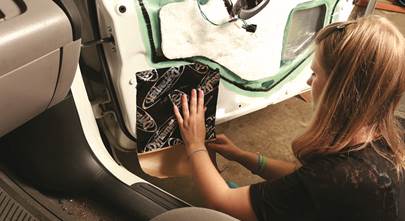
(21:35) I knew there was a reason we had you on this show. (21:37) Blast. (21:39) So if you start Googling DynaMAT, you might find that people sometimes will line their (21:46) entire car with DynaMAT, which if you're doing a massive system with multiple amplifiers (21:51) and subwoofers, that might be a really helpful thing.
Not necessary when you're just replacing (21:56) those six and a halves in your front doors or your six by nines in your rear deck, right? (22:01) A little DynaMAT goes a long way. (22:03) We've all driven, I call it stoplight bass. You get to a stoplight and the car next to (22:08) you is vibrating.
(22:09) Oh yeah, the cool kids. (22:10) Oftentimes you're not hearing the subs in that car. You're hearing that car vibrating (22:17) in sympathy to that.
And if you were to cancel out those other vibrations, you would get (22:22) so much more bass. And I feel like knocking on the window, but hey, I know a way you can (22:27) get more bass just by canceling out all that other vibration. (22:30) They would hear more bass and you would hear less of their car.
(22:34) Both are good days, right? (22:35) Right, right. So a little DynaMAT goes a long way around your speakers. I mean, there are (22:40) DynaMAT speaker kits for way less than our least expensive speakers.
So it doesn't cost (22:47) much to add this to the door panel, the metal, the plastic, all the stuff around your speaker. (22:52) And that will make a difference. If you, don't believe me, install one speaker with it and (22:59) install the other speaker without it and drive around for a week and see which door (23:02) is making extra noises and which one isn't, which speaker sounds better and which one (23:07) doesn't.
(23:08) If memory serves me correctly, you actually have a demo you use for the sales classes, (23:12) don't you JR? Like a little DynaMAT demo? (23:14) Very helpfully provided by DynaMAT. (23:16) Of course, yes. (23:18) And so what they did, what I'm holding in my hands, those of you at home and can't see (23:24) us, I have two, I don't know, brass, copper, what are they? (23:28) Discs.
(23:28) Discs, yeah, metal, pieces of metal that are around there. (23:32) About the size of a silver dollar maybe? (23:33) Maybe even a little bigger than that. (23:35) Okay.
(23:35) One of them is just plain and one of them has a tiny little piece of DynaMAT on it. (23:40) And if I drop this on my desk near this microphone, you'll hear the difference. (23:45) Do it.
(23:45) So here's a piece of metal without any DynaMAT on it. Here's what it sounds like. (23:52) And here's the exact same size coin made of the exact same metal with a tiny little bit (23:57) of DynaMAT on it.
(24:01) One more time. (24:03) No DynaMAT. (24:05) DynaMAT.
(24:06) This reminds me of when people go shopping for a car, right? (24:09) And you open the door and you shut the door real quick, right? (24:14) And what you're hoping for is a nice sound, right? (24:18) Does it sound like a Lexus or a Yugo? (24:20) Right, right. (24:22) After you shut it, five seconds later, are you still hearing the act of shutting it? (24:27) Or is it nice and clean? (24:29) And that's what DynaMAT can give an old car. (24:31) So it's really good stuff.
(24:32) For a long time, DynaMAT was kind of the only player in this game, at least at Crutchfield. (24:38) We now have other brands of products that do sound deadening, Hushmat and SoundSkins. (24:44) Peter, you're responsible for buying all of this stuff, right? (24:47) You got any thoughts on how sound deadening products have evolved over the past years? (24:53) I mean, they really have.
(24:54) Before, there was just that initial sort of the core material, which was usually a very (24:59) sticky material that adhered to the door. (25:03) There was sometimes a piece of aluminum in there that also helped with heat transfer. (25:07) And then there was a softer material.
(25:08) So there usually were multiple layers of the sound deadening that would go. (25:13) And we would make them in big sheets for an entire trunk or a door and small little sheets. (25:19) But they've really continued to figure out, how else can we get better sound besides (25:24) minimizing those core vibrations? (25:26) So some of the things they've done is, again, expand into products that cancel that back (25:31) wave that I was talking about, which also, again, is going to give you better performance.
(25:36) Those rings that we mentioned earlier, where, again, you're kind of sealing the gap from (25:40) the speaker to the door panel itself. (25:42) And there are several kits. (25:44) SoundSkins makes a great kit called their Sound Quality Speaker Kit that includes all three (25:50) of those things.
(25:50) It includes a piece of sound deadening for installing the speaker. (25:54) It includes a back wave component. (25:55) And it includes a sort of a ring that you put between the speaker and the door panel.
(26:00) And those three combined things sort of address all of the aspects that could deter the performance (26:06) of the speaker. (26:07) So I think they continue to look at, hey, how can we...we get a great idea by minimizing (26:12) these vibrations. (26:13) How else can we help that speaker perform the best way it possibly can in that location? (26:19) And that's sort of a universal kit, right? (26:21) You could buy that with any set of speakers going into any car, and it probably...you'll (26:25) be able to use some or all of it to make your speakers perform their best.
(26:29) If you want to take your sound deadening to just ever so slightly the next level, where (26:36) maybe you want to cover your entire door panel, right? (26:38) And really get more sound deadening effect. (26:42) One of the things I like about where we are now compared to where we were 30 years ago, (26:47) you used to always have to just take a big sheet and a big old utility knife and a roller (26:52) and all these things to, you know, make your sound deadening material, your dynamat, the (26:57) right size and shape for your door. (27:00) And it was messy.
(27:01) It was a lot of work. (27:03) There are now... (27:03) Sticky. (27:03) It was also very sticky.
(27:04) Got so much of that black stuff on your fingers when you're done. (27:07) But now there's like vehicle-specific kits for a lot of the more popular vehicles from (27:13) several of these companies, right? (27:15) Yeah. (27:15) If you've ever taken off the door panel of a speaker, you'll notice it's not just a (27:19) solid sheet of metal in there.
(27:21) There's all these sort of openings where the controls and wires from the door are coming (27:24) through. (27:25) So, you know, it's not just a solid surface. (27:27) There's all these, you know, openings and divots.
(27:30) So SoundSkins is one of the manufacturers, you know, carrying these vehicle-specific (27:35) kits. (27:35) They actually do 3D scans of the interior of the door, and they have this fancy machine (27:39) that will cut out all of the various openings and contours of that vehicle. (27:44) So it is specifically designed and shaped to fit perfectly on the inside of that door (27:50) panel with, you know, with no extra, you know, material in there.
(27:53) So again, it's very easy to install. (27:55) It leaves opening in spaces for where it needs to be for controls or cables or wires, but (28:00) does a great job of covering all the available surface to give you the best possible coverage. (28:06) All right, fellas, we're two-thirds of the way through this.
(28:10) We are done covering products you can buy from Crutchfield. (28:15) We are a retailer with a podcast, so there's always going to be some of that on this show. (28:20) But really, this was not all about, hey, buy this, buy this, buy that.
(28:24) And so we want to finish up with a whole section of just tips you can do that don't cost any money (28:32) to make sure your speaker installation is done correctly so that you're not costing yourself (28:38) performance. (28:39) So best practices. (28:40) Yeah, it's just general common sense speaker installation tips.
(28:43) Go ahead, Peter. (28:44) I mean, we have a lot of customers who've been doing this for years, right? (28:47) They're passionate, they're enthusiasts, they've learned stuff by doing this over and over again, (28:51) and they've learned some tips and tricks, and they've got some great experience under their (28:57) belt. (28:57) But hey, for a lot of customers, this is the first time that they're doing it, right? (29:01) They came to us and we go, hey, we can help you do this.
(29:03) We're going to give you detailed instructions on how to remove the door panel. (29:07) We're going to make sure that the speaker fits. (29:09) We're going to make sure you have all the wiring harness adapters and speaker adapters.
(29:12) We're going to give you all of that stuff to do. (29:15) But again, this may be the very first time that they're doing this. (29:18) So there are some basic sort of 101 pointers of, okay, you got the stuff, right? (29:23) You opened the box from Crutchfield, the packing peanuts were flying around, you got the speaker, (29:28) you got the wiring, you got everything, you got the door panel taken off with our detailed (29:32) instructions, and you're ready to do it.
(29:35) But are there some tips or tricks that I can use to make sure I'm doing this right? (29:39) Because again, I've never done this before. (29:41) And if you have done it before, some of these are going to sound really obvious. (29:45) So bear with us.
(29:47) First off, screw those things in tight, right? (29:50) They come with screws for a reason, and it is so that you can really get them in there snug (29:55) so that there is no wiggle room or play in the movement of the speaker. (30:00) It needs to be securely mounted to the door. (30:04) And I can't tell you how many times I've done speaker installations where I've thought to (30:08) myself, do I need to install all these screws? (30:11) There's four screws, there's four screw holes, there's four screw holes in the car.
(30:14) Do I need to put in all four? (30:16) The more you put in, the more secure it will be. (30:20) If one of them works loose, you've still got three other ones holding it nice and tight, (30:24) right? (30:25) So yes. (30:27) Is one screw enough? (30:29) No.
(30:30) Is two screws enough? (30:33) Have you ever installed a speaker with just two screws, Peter? (30:36) Yes. (30:37) A three and a half inch speaker only has two screw points. (30:39) There you go.
(30:40) Smaller speakers can certainly be held in place. (30:42) More than that, at least minimum four. (30:46) That's usually what you'll see on the inside of a door.
(30:49) You'll see a speaker and sometimes you'll look at that and there's like 12 different (30:53) holes around the outside of the speaker. (30:55) Am I supposed to use all of these? (30:57) No. (30:57) Those extra holes around the speakers are for different configurations, different applications.
(31:03) So some cars take these four holes and I'm holding my hands up. (31:06) You can't see it. (31:06) The guys here in the studio can see it.
(31:08) It's a great visualization. (31:10) Sometimes you use these four screws and sometimes you use these four because they're a slightly (31:14) different orientation. (31:16) But yeah, absolutely.
(31:17) I'm just following along. (31:18) Yeah. (31:18) You absolutely use the four that align to the holes that are in the vehicle.
(31:23) Rarely, I don't know. (31:24) You guys pitch in. (31:25) Rarely do I've seen more than four mounting holes for a speaker.
(31:29) Yeah. (31:29) You're getting past the point of diminishing return there, right? (31:32) For subwoofers, right? (31:33) Like as drivers get larger, they need more screw holes. (31:36) The bigger the speaker, the more powerful the speaker, the more screws you're going (31:40) to need to hold it in place.
(31:41) The more surface area. (31:42) But when we're talking six and a halfs and six by nines, the most common size replacement (31:46) speakers, four screw holes fill those holes. (31:50) In some cars, you may need to re-drill or drill new screw holes to get to that point.
(31:57) And I would posit that it's worth it. (31:59) And our instructions usually detail that, right? (32:01) So we're not going to just leave you hanging like what to do. (32:03) If in the installation process, we think that re-drilling that screw hole is the best (32:09) of the way to do it, we will spell that out and say, you should re-drill this screw hole (32:13) in this application.
(32:14) Because based on our experience and our research, that's what you're going to need to do to (32:19) get, again, that. (32:20) Is that the next helpful hint is to buy your speakers from Crutchfield? (32:23) Because we'll make sure you have. (32:24) Oh, is that too early? (32:25) Not too early at all, Huffy.
(32:27) You're right on the money there. (32:28) Because when you do buy your speakers from Crutchfield, if we are aware of a bracket (32:34) that is made for your car to put these speakers into your car, guess what we do? (32:41) Well, you don't have to guess. (32:42) Those of you at home, guess right now.
(32:44) Ready? (32:46) Did you guess it right? (32:48) We give you the bracket. (32:49) It's included for free. (32:52) That's currently the deal and has been for years at Crutchfield.
(32:56) So if we are giving you that bracket, there's a reason. (32:59) It's to help make a good seal. (33:00) It's to help make that speaker fully secured to the door.
(33:04) It's to make it fit and fit right. (33:07) So use the bracket if we give you one. (33:09) So along with using the brackets and such, you want to just make sure there's no gap.
(33:14) And we've covered all of the ways to do that already. (33:18) And what's that last tip there you've got there, Huffy? (33:22) Oh, you're making me read it. (33:24) Okay.
(33:24) Go with speakers that fit. (33:26) Wait, what? (33:27) Not too tall, not too deep, et cetera. (33:32) I don't think you're supposed to read that part.
(33:36) And this is crucial, right? (33:37) So many times I've seen people in a lot of applications, not only in cars, (33:42) but in boats and motorcycles and all the things where they think, well, you know, (33:46) there's a six and a half inch speaker in there, right? (33:48) And I can just buy any six and a half speaker and that's going to fit in that opening. (33:52) That is not a correct assumption, right? (33:55) You want to make sure that you are using speakers that fit that specific opening. (34:01) And that's one of the things that we do.
(34:02) I think far better than anyone else is we do the research on the vehicle. (34:07) We take the car apart ahead of time. (34:09) We measure that opening.
(34:10) We measure how wide it is, how deep it is. (34:12) If there's any sort of kind of conical restrictions when you're putting a speaker in. (34:19) We also then have another team of people who are measuring the speaker.
(34:23) They measure, again, they measure the depth. (34:25) They measure, you know, all of the different dimensions. (34:27) And then we match up the actual dimensions of the speaker to that vehicle to know that (34:33) that speaker that we are recommending will fit.
(34:35) And we will actually share that on our website. (34:37) We'll say, hey, this will fit. (34:39) Sometimes we'll go, hey, this will fit, but you're going to need to use this extra part.
(34:42) And we'll detail you what those things are so you can understand what it is. (34:46) Sometimes we're going to tell you that, you know, if it's going to fit, you're going to (34:49) have to modify the opening. (34:51) And we are really good at telling you that if that is the case in your vehicle.
(34:56) But almost, hey, for the most part, people just want something that's going to drop in, (34:59) that's going to fit, and again, give them that better performance. (35:02) So I think that's the first where you start is come to us, put your vehicle into our database, (35:08) and it will show you these are the speakers that fit. (35:11) And then we will provide the instructions.
(35:13) In some cases, we'll provide the speaker brackets and, you know, (35:17) Wiring harnesses. (35:18) Wiring harnesses. (35:19) All that stuff for you to be able to do that job, do it right, you know, (35:24) and do it complete the first time.
(35:26) And, you know, many of the speaker companies work with us on that database so that they (35:31) can make more speakers that fit more cars. (35:33) It's pretty rare these days that we pull up a vehicle and there's just no speakers that fit. (35:38) There are those cars out there, don't get me wrong, that are impossible to work on.
(35:43) But we've got a speaker from just about every car out there. (35:49) All right, fellas, we've covered it. (35:51) The baffling idea, to baffle or not to baffle.
(35:54) I'm not even going to say it now. (35:56) Is it sound damping, dampening, or sound deadening? (36:00) And what is that all about? (36:01) We've covered that, and we've given you some general installation tips for (36:05) the right ways to install new speakers. (36:09) That's going to do it for this episode.
(36:10) Next month, we're going to take this same approach and apply it to home speakers. (36:16) Thank goodness. (36:17) That's where Huffy really likes.
(36:20) He gets passionate about home stuff. (36:22) Peter is more of a car guy, and that's why he's here today. (36:26) So we're going to talk about all of the inexpensive ways you can make your home speakers (36:30) sound their best.
(36:32) If you've got thoughts on what we talked about today, baffles, dynamat, or anything car speaker (36:37) related, please hit us up. (36:39) Send us an email, podcast at crutchfield.com. (36:42) Do you want to get ahead of the game and ask us some questions about home speaker placement (36:46) before we record our next episode? (36:48) Act quickly so we can address your question on the air. (36:52) Same thing, podcast at crutchfield.com. (36:55) And all things Crutchfield Podcast can be found at crutchfield.com slash podcast.
(37:00) We've got show notes, links to products that are discussed on this show, transcripts, (37:05) everything. (37:05) It's all there. (37:06) Big thank you to Peter and Huffy for hanging with me today to talk speakers.
(37:12) Thanks for coming in. (37:13) Absolutely. (37:13) Thanks for having me.
(37:14) This has been fun. (37:14) Don't feel like you always have to be here. (37:16) No, invite me anytime.
(37:21) It's almost like you didn't pick up on the dig just now. (37:26) Almost. (37:28) Crutchfield, the podcast is recorded at Crutchfield headquarters, located in beautiful (37:32) Charlottesville, Virginia.
(37:33) Our hometown since Bill started the company in his mother's basement in 1974. (37:39) And lastly, thanks to Bill Crutchfield for continuing to pay us to talk about the coolest (37:44) gear on the planet. (37:46) Thanks, Bill.
(38:17) Destructive interference.

Comments (0)