2004-2009 Dodge Durango and 2007-2009 Chrysler Aspen
How to upgrade the stereo system in your Durango or Aspen


In brief: This Crutchfield Research Garage article gives you an overview of your vehicle's stock stereo system and your aftermarket upgrade options. We'll tell you all about:
- The factory stereo system
- Removing the factory radio
- Removing the factory speakers
- Adding more bass
- Other options for your Durango or Aspen
Then, use our vehicle selector to find the gear that will fit your Durango or Aspen.
Overview of the Dodge Durango and Chrysler Aspen
Bigger isn’t always better, but if you're in the business of selling SUVs, it sure does help. That's why the second-generation Dodge Durango is bigger and brawnier than its comparatively svelte predecessor. There's more room for people and stuff, the ride is arguably better, and the available Hemi power ensures that you can tow just about anything that doesn't have a finished basement.

The upsized Durango, along with its upscale sibling, the Chrysler Aspen (of all the old model names, why bring back that one?) have the storage space, the seating, and the luxury features that SUV fans crave, plus distinctive styling that really stands out from the herd.
Like most car stereos from this era, the factory gear is competent, but that's about all. Technology has come a long way since these trucks were new, so an aftermarket receiver and speakers will give you better sound and vastly improved functionality.

There are plenty of aftermarket options for upgrading the factory radio. (Crutchfield Research Photo)
The factory stereo system
The stock stereo array starts with a 4-speaker base system and tops out with a premium 9-speaker Alpine system.
When you replace the stock radio, you’ll lose some factory features. Depending on how your Durango or Aspen is equipped, those features can include UConnect, the factory satellite radio and hands-free cell phone features, the factory subwoofer and its amplifier, and the factory navigation system. All of these things are solvable (and improvable, frankly) with the right aftermarket gear.

Here's a close-up look at the factory navigation receiver in a Chrysler Aspen. (Crutchfield Research Photo)
You’ll find a healthy variety of aftermarket speakers that will work in your Aspen or Durango, but you’ll want to shop carefully. Unless otherwise noted below, the stock speakers are low-impedance models, so replacing them with a higher-impedance (4-ohm, for example) aftermarket speakers will result in lower volume levels.
Before you start the job, make sure you eject any forgotten disc(s) from the factory unit – especially if your vehicle is equipped with the 6-disc in-dash changer. Next, and more importantly, set the parking brake and disconnect the negative battery cable to prevent any electrical short.

The radio removal process is reasonably uncomplicated in these SUVs. (Crutchfield Research Photo)
Removing the factory radio
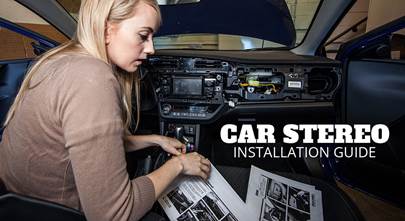
The radio removal process varies a bit depending on the receiver you’re dealing with and whether it’s in an Aspen or a Durango. The good news is that the job’s not too difficult and all the step-by-step details can be found in the Crutchfield MasterSheet included free when you buy your new stereo from us.
Installing that new receiver isn’t that hard, either, and when you enter your vehicle information, we’ll make sure you get a single-DIN (2" tall) or double-DIN (4" tall) receiver that’ll work in your vehicle. You’ll also get a nice discount on the dash kit and wiring harness you’ll need for the installation, both of which include their own instructions.
Detailed stereo and speaker removal instructions
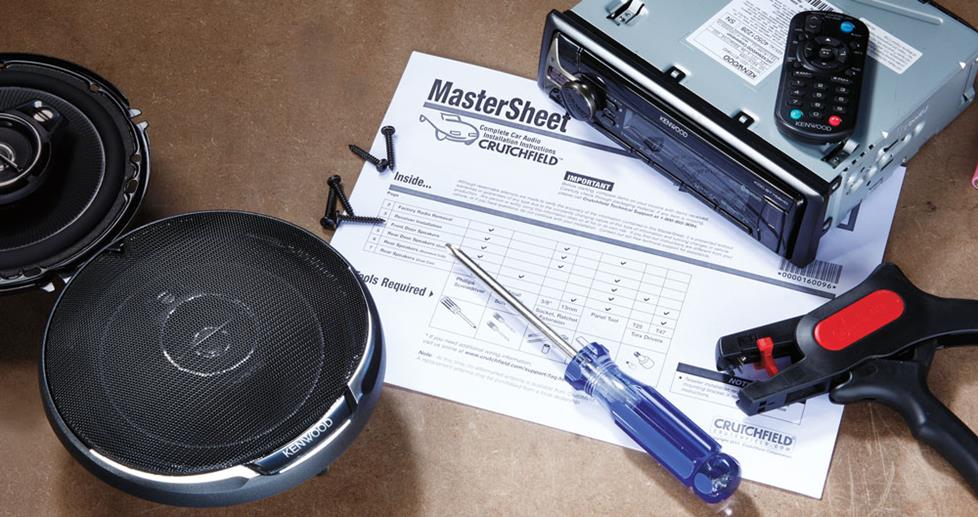
The receiver wiring method will depend on the factory equipment you’re starting with, the system you’re building, and maybe a couple of other things. We’ll make sure you know everything you need to before you place your order, but trust us, the installation is not as hard as we might be making it seem.
If you have questions about any of this (which you very well might), our experts can help you choose the stereo and speakers that are right for you and your vehicle. Your Crutchfield purchase also includes free tech support for the life of the gear, so if the installation gets challenging, we’re here to help with that, too.
Tools needed: Panel tool, Phillips head screwdriver, 7mm socket, ratchet and extension
Read our Car Stereo Buying Guide for shopping tips and advice.
Shop for car stereos that fit your Chrysler Aspen
Steering wheel audio controls
In most cases, it's reasonably easy to retain your truck's steering wheel audio controls when you install a new stereo. When you enter your vehicle information, our database will choose the adapter you need to make your factory steering wheel controls work with a compatible aftermarket receiver.

If you want better sound in your Aspen or Durango, new speakers will be an important upgrade. (Crutchfield Research Photo)
Removing the factory speakers
Replacing the stock speakers is a great way to improve your sound, even if you plan on keeping the factory receiver. Speakers age quickly, so an upgrade is definitely a good idea for your Durango or Aspen.

The dash speakers are under a panel, and they're not hard to get to. (Crutchfield Research Photo)
Removing the dash speakers
The 3-1/2" corner dash speakers are reasonably easy to deal with and, since the Aspen and Durango are the same vehicle from the dashboard back, the process is the same for both models.
You’ll start on the driver’s side, where you’ll pull the pillar trim panel from the top edge to release the retaining clips. Slide the plastic strap off of the trim panel, then pull off the panel. Over on the passenger’s side, you’ll use a panel tool to pry open the two screw covers on that pillar trim panel. Remove the exposed 10mm screws, then pull the trim panel off from top edge.
Next, pry along the rear edge of the dash trim/speaker grille panel to release the retaining clips, then lift the panel off. Remove the two 7mm/Phillips screws securing the speaker, then pull it out and disconnect it.
To install the new speaker, connect the speaker wiring adapter (included free with your speaker purchase) to the new speaker, then to the vehicle’s speaker harness. You can secure the new speaker with the screws you removed from the old one.
Test the new speakers to make sure they’re working properly. If they are, you can start putting everything back together again.
Tools needed: Panel tool, 7mm socket, ratchet and extension, flat blade screwdriver, 10mm socket

You'll need to remove the door panels to replace the front door speakers. (Crutchfield Research Photo)
Removing the front door speakers
The front doors house 6-3/4" speakers that can be replaced by a variety of same-size, 5-1/4" or 6-1/2" aftermarket models. You’ll need mounting brackets for some of them, and we’ll include those (plus the necessary wiring harness!) with your speaker purchase.
You’ll need to remove the door panels to get to these speakers, a procedure that’s well within the capability of the average car audio DIY-er. Work carefully, though, and keep those panels and screws organized because you’ll need them all later.
Once you’ve secured the new speakers, be sure to test them to make sure they’re working properly. If they are, you can start putting the doors back together. Make sure the wires are not interfering with the windows, and also check to see if the door lock and release mechanisms are functioning as they should.
Tools needed: Panel tool, Phillips screwdriver, Torx T-20 driver

The rear speaker removal process is different, but do-able. (Crutchfield Research Photo)
Removing the rear door speakers
The rear doors have their very own 6-3/4" woofers, and there are also plenty of same-size, 5-1/4", or 6-1/2" replacements available. We’ll include brackets if you need them. The upper-level systems include tweeters, which are also quite easy to deal with.
You’ll need to remove the door panels to access these speakers, too, but the process is a bit different than the one for the front doors. First, remove one Phillips screw from the door release trim. Next, pry up the rear edge of the power window switch to release the retaining clips, then pry up the inside edge of the switch to release some more clips. (Do not pry up from the front edge — that won’t go well.) Lift the panel, disconnect the wiring harnesses, and remove it.
Remove two Phillips screws from the bottom edge of the door panel, then lift the door panel and hold it out enough to disconnect the door release linkage rod. Disconnect the rod by rotating the clip, then lifting the rod. After that, remove the door panel and store it someplace clean and dry while you continue working.
Finally, remove the three Torx T20 screws securing the stock speaker, then pull it out, disconnect the harness, and remove it.
Once you’ve secured your new rear door speakers, test them to make sure they’re working. If they are, start putting the doors back together. Again, you’ll want to make sure the wires aren’t interfering with the windows, and double-check that door lock and release mechanisms are functioning as they should.
Tools needed: Panel tool, Phillips screwdriver, Torx T-20 driver

Getting to the cargo area subwoofer is not the easiest project you'll ever undertake. (Crutchfield Research Photo)
Removing the rear sub
The factory subwoofer (if present) is a low-impedance 8" dual voice coil model that’s mounted behind a panel on the left side of the cargo area. There aren’t a lot of direct-fit aftermarket subs that’ll work back here, and whatever will work should probably be a shallow-mount 2-ohm model. Pay attention to impedance figures when you’re shopping, of course.
Owing to the stock sub’s 6-hole bolt pattern, you’ll need to drill new mounting screw holes for anything you install back here, and while the job’s not hard, you are drilling holes in a vehicle you own, so work carefully, know what you’re drilling into, and definitely wear eye protection.
But you don’t have to worry about that until you get to the sub, which will, um, take a minute. The rear side panel must be removed before you can do anything else, and that is not the easiest thing you’ll ever do. The individual steps aren’t that hard by themselves, it’s just that there are a lot of them. A LOT of them. We’ve done it, and it’s character-building, to say the least.
Can you do this yourself? Yes, but it’ll take time, patience, and planning. Organization, too, since there will be a whole bunch of panels and screws to keep straight while you’re removing them. And you might want to invite a friend over to help.
We’d also recommend giving us a call and talking to a Crutchfield Advisor before you make any definitive decisions about what you want to do back here. We can help you choose the right sub and give you some advice on how to install it. All the disassembly details will be in your Crutchfield MasterSheet, of course, but we should probably talk first.
Tools needed: Panel tool, Phillips screwdriver, flat-blade screwdriver, Torx T-25, T-40 and T-50 drivers
Read our Car Speakers Buying Guide for more information.
Shop for speakers that fit your Chrysler Aspen

With the seats up, there's still a useful amount of space for a sub enclosure back here. (Crutchfield Research Photo)
More bass in your Durango or Aspen
Another (potentially easier) way to boost your bass is to install a subwoofer enclosure in the cargo area. The actual measured space is 47"W x 13"H x 17"/10"D, so there’s room to work with. If you still need room for all the stuff you bought an SUV to haul in the first place, a more compact powered subwoofer might be a more practical solution.
Learn more about building a bass system in our Car Subwoofer Buying Guide.

Protect your SUV's carpeting with a set of custom-fit WeatherTech FloorLiners.
Other options for your Durango or Aspen
Here are a few other ways to improve the comfort, convenience, and safety of your Dodge Durango or Chrysler Aspen.
Protect the carpets with WeatherTech floor liners
Those old factory floor mats are probably worn out by now, so you might be ready for an upgrade. Floor mats and liners from WeatherTech will help protect your SUV's carpeting from dirt and damage.
Dynamat sound deadening
The Dynamat 10435 Xtreme Door Kit is the perfect way to seal in sound. This heavy-duty insulating material is easy to install, and it really makes a difference. One kit will take care of the front doors.
Protect your stuff with a security system
Installing a security system in your vehicle isn't easy (security systems rarely are), but it's less complicated than it could be. A Crutchfield Advisor can help figure out what you need to get the job done, but we usually recommend taking your car and new gear to a professional security system installer.
Let's get started!
Ready to shop? Use our vehicle selector to find the gear that will fit your car or truck. If you have questions, give us a shout via phone or chat.





Comments (0)