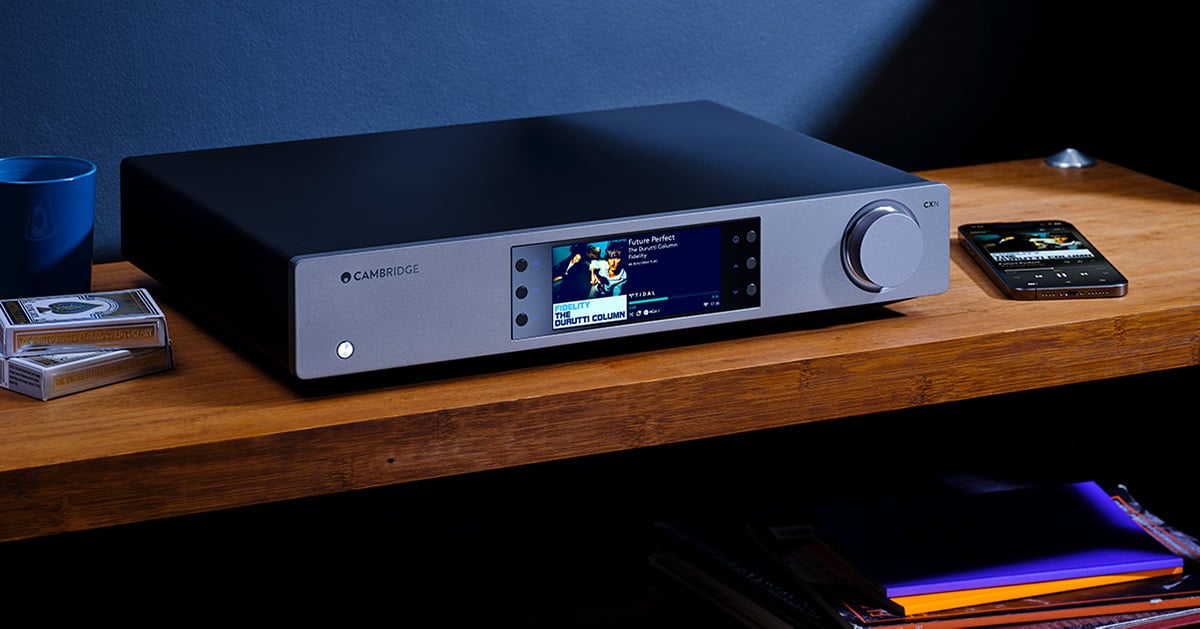
Best hi-fi streamers for 2026
How to choose the best option to add streaming to your existing sound system

In this article: We’ll share some of our favorite non-amplified music streamers...
- Best value — WiiM Pro
- Best CD player/streamer — Marantz SACD 30n
- Best audiophile streamer — Cambridge Audio CXN100 SE
- Best high-res multi-room streamer — Bluesound NODE ICON
- Best for Sonos users — Sonos Port
- Best user interface — WiiM Ultra
- Best compact hi-fi streamer — Cambridge Audio MXN10
...But before we dive into the picks, we'll cover what to look for in a streamer.
Streaming is probably the most common way that people play music today. But it's still a bit mystifying for a lot of us. Maybe because we feel like we have to rebuild our carefully curated hi-fi systems to accommodate this ubiquitous but disarmingly invisible music format.
The hi-fi streaming music players I'll talk about in this article are some of our favorite models without built-in amplification. We've also collected our favorite amplified streamers in a separate article.
These components let you add streaming to your existing sound system and connect to your home network so you can access your favorite streaming services.
Streamer features to look for
Internal components and circuit design make a difference — and influence cost. My dad used to say, “It costs more because it’s better.” Here at Crutchfield, we do our best to offer gear for which that is true.
Some of these streamers have a ton of inputs and work as a high-performance preamplifiers. Some have fewer connections but still deliver high-res sound. Which one is best for you all depends on your needs. Let's look at a few streamer features to keep in mind while you shop.
Digital-to-analog converter
Almost all streamers have a built-in DAC. Let’s clarify why that’s important.
A digital-to-analog-converter — a DAC — is what transforms the 1s and 0s that make up digital music files into analog music. If you’re just getting into it, it can be confusing because computers, smartphones, TVs, and all sorts of components have built-in DACs that you don’t hear much about. But if your receiver, preamp, or integrated amplifier has digital inputs, it has a built-in DAC.
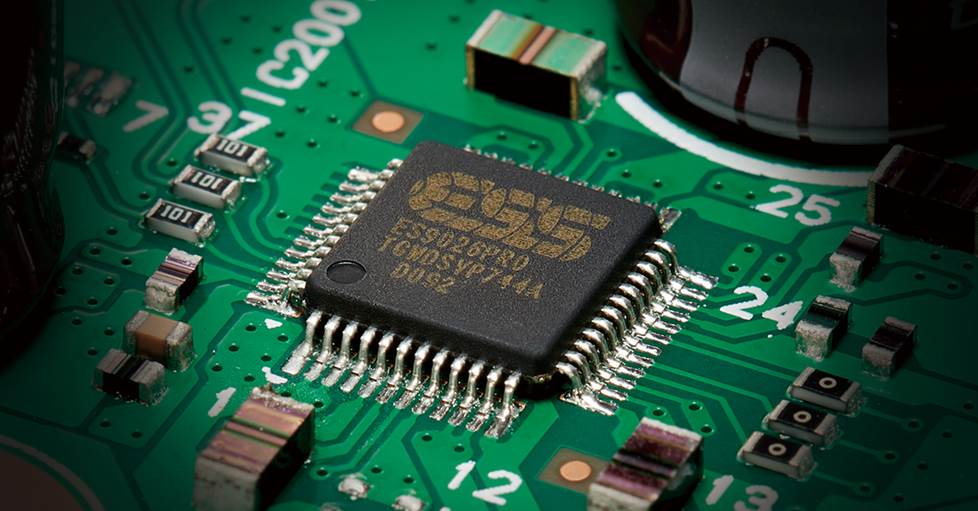
The digital-to-analog converter — DAC — in your streamer decodes 0s and 1s into beautiful music.
When you get into streamers and higher-end receivers and integrated amps with built-in DACs, companies tend to put information about which DAC chip they’re using front and center. For instance, Bluesound’s current NODE lineup all use the ESS SABRE 9039Q2M DAC chip, which my colleagues and our customers have agreed has a remarkably nice sound.
A lot of streamers also have digital outputs — like optical and coaxial. A few, like Hi-Fi Rose’s RS130, only have digital outputs and require an outboard DAC. But all of the streamers in our list of favorites have both analog and digital outputs.
I’ve got one amp in my home that has digital and analog inputs — which means it has a built-in DAC. Whenever I’m testing a streamer, I try it with both a digital and analog connection to that amp. Sometimes it’s obvious which DAC sounds better — the one in the streamer or the one in the amp. Other times you can barely tell the difference.
Streaming capabilities
You’ll want to make sure the streamer you buy supports the streaming service you use. If you want to stream from a network attached storage drive or if you want to be able to directly connect a computer or USB drive to play music, make sure your streamer has the right inputs.
A lot of streamers support Apple AirPlay®, Spotify® Connect, TIDAL Connect, Google Cast, Roon, and so on, so check to make sure you can stream the way you want to stream.
Most of these streamers have Bluetooth®, and some of them have two-way Bluetooth that lets you stream to a pair of compatible headphones for managing volume — like late-night listening. Bluetooth can’t rival Wi-Fi or Ethernet for sound quality. But it can sound remarkably good. And since almost everyone knows how to use it, it comes in handy a lot at my house.
Brand-specific app control
I appreciate a good proprietary control app — whether it’s for a multi-room system or just for a standalone streamer — even though it means adding another app to my life when I use them. Once you figure out how things work, the good ones actually make control better, faster, and simpler. And you don’t find yourself having to re-pair with your player or players every time you start a new listening session.
Some, like the Sonos and Bluesound choices in our list, support wireless multi-room streaming systems that let you control multiple players with a user-friendly app.
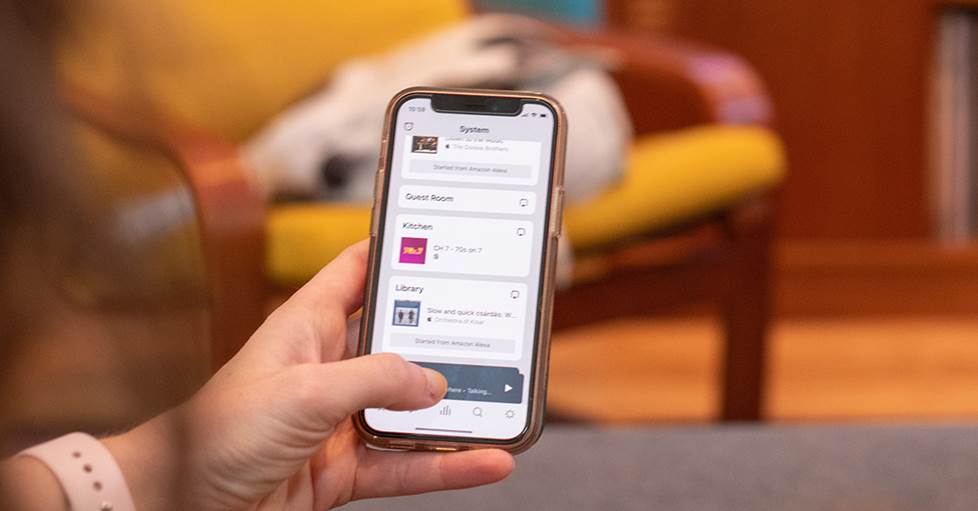
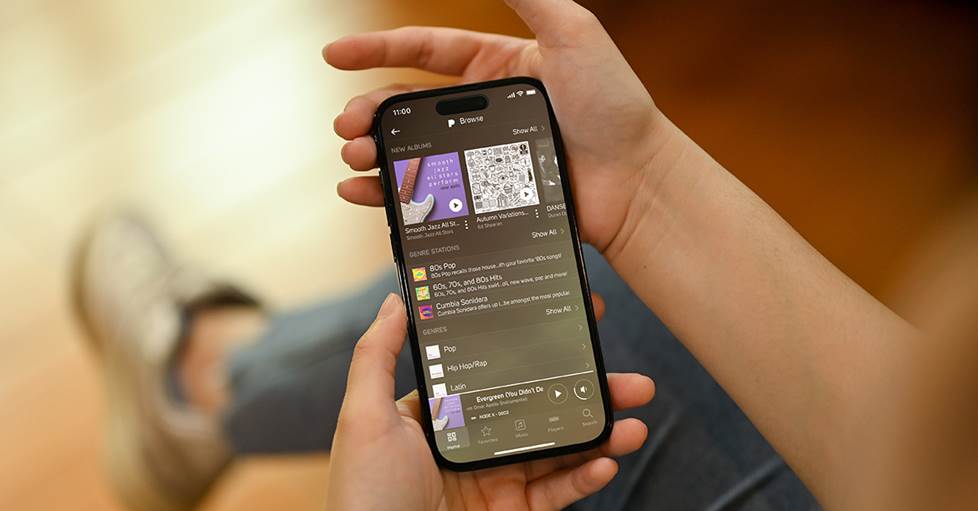
Control apps for wireless multi-room systems like Sonos and Bluesound give you powerful control over your music.
These are pretty powerful apps. You can group all the players together and play the same music throughout your house. Too loud in one room? You can control volume independently. You can even play different music in different rooms.
Wired connections
All of these streamers have an analog stereo RCA output and at least one digital output for connecting to your amp. Higher-end streamers tend to have more and better connections, like balanced analog stereo XLR output for the cleanest, strongest audio signal. And models with an HDMI eARC input provide seamless TV integration.
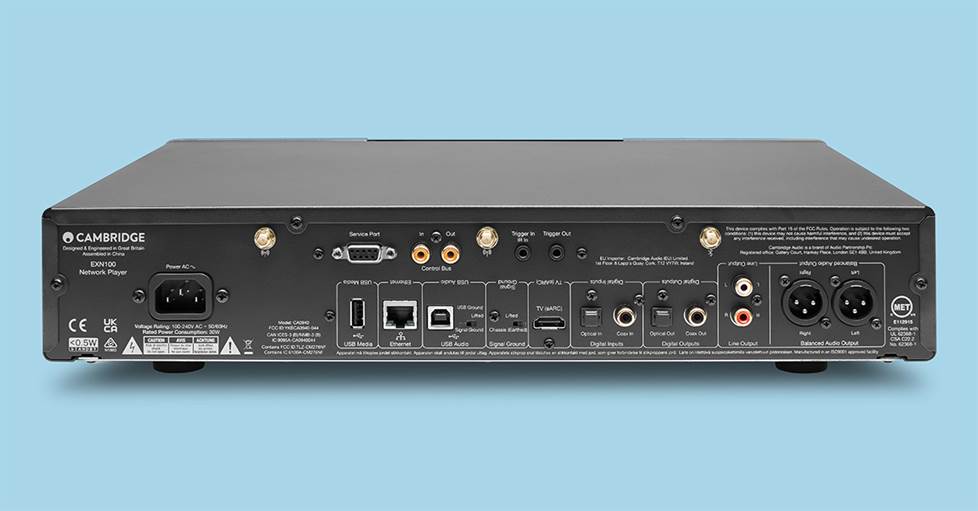
Wired connections like balanced XLR outputs and HDMI eARC add versatility to a streamer.
Other connections to look for include USB input for a flash drive loaded with music files and digital and analog stereo inputs for connecting sources.
You might want digital outputs to connect to an outboard DAC or amp with digital inputs. And some models have an output for a powered subwoofer if you want more bass in your sound system.
If you want to simplify your control options, look for an IR input or a 12-volt trigger output that let you set up your streamer to turn on and off when you power up your amp.
All of our picks here use a detachable power cord, and higher-end models use heavier, grounded 3-prong IEC cords, which can help reduce noise for clearer audio.
Our top picks
Our list contains solid choices for several different listening setups. We picked them based on experience and customer satisfaction. So let’s start with…
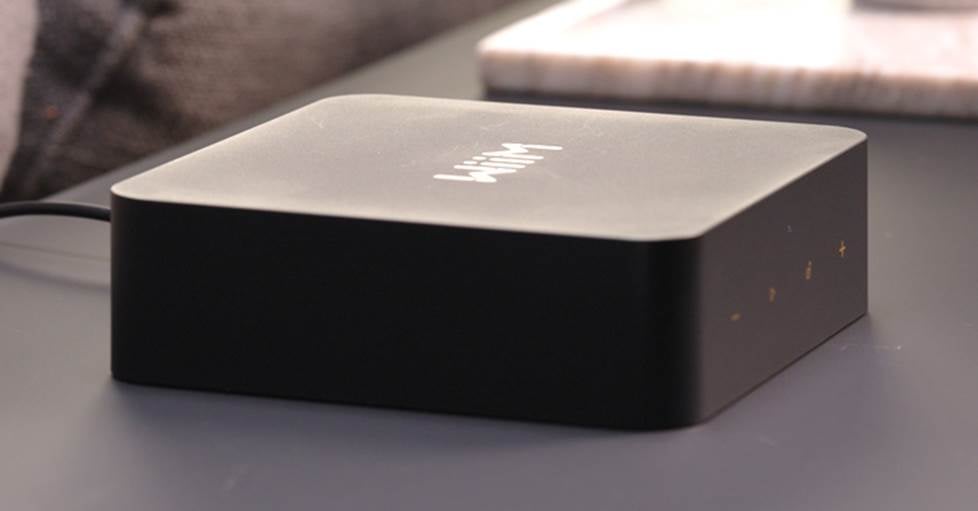
Best value streamer — WiiM Pro
WiiM's sleek and compact Pro lets you easily add music streaming capability to any stereo or home theater system. It could also be the heart of a small-footprint music system for a home office, dorm room, or apartment — just connect the Pro to a pair of powered speakers and control it with your smartphone.
You can access and manage a bunch of music services from within the app, and control music across multiple WiiM players in different rooms (additional players sold separately). I tested the Pro at home and own a pair of WiiM Ultras and an Amp Pro. They've enriched our home's musical landscape by sounding great, and also by making it easy for my family to play music when they want without "technical difficulties."
The Pro's appealingly low price, high-res sound, and proven user-friendliness make it an easy choice when you want an incredible value-to-performance streamer.
- high-performance streamer and preamp for digital and analog sources
- works with Google Cast, Apple AirPlay 2, and Roon
- easy-to-use WiiM app lets you control other WiiM devices on your home network and play music from Amazon Music, Deezer, TuneIn, iHeartRadio, and more
- supports Connect feature in Qobuz, Spotify, and TIDAL
- two-way Bluetooth can wirelessly receive audio from compatible devices and send audio to compatible headphones and speakers
- maximum resolution: 24-bit/192kHz
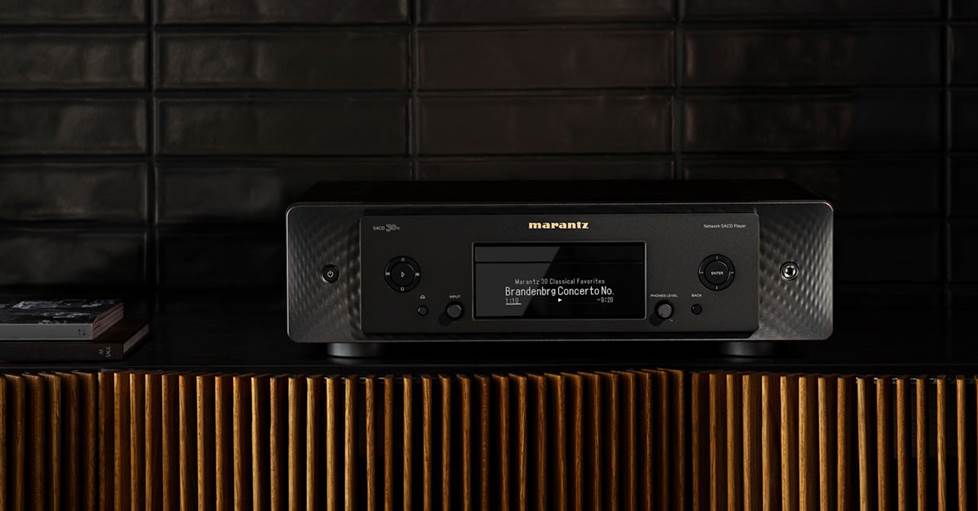
Best CD player/streamer — Marantz SACD 30n
Marantz components tend to sound fantastic, and the SACD 30n is no exception. Lots of detail and lots of substance. This multi-talented streamer is made in Japan at Marantz’s storied Shirokawa facility and has a hefty 30-pound-plus build.
This thing can do a lot. It’s a top-notch streamer with the HEOS multi-room platform built in. It also plays the highest quality CDs available: Super-Audio CDs, or SACDs, as well as pretty much any other kind of CD, including home-burned ones, with support for a wide range of formats. It also supports a bunch of different streaming platforms.
Like a lot of streamers, it can function as a preamp, with coaxial and optical digital inputs, plus USB Type A and B ports for connecting storage drives or a computer. Separate fixed and variable stereo RCA outputs let you connect to an integrated amp or receiver, or directly to a power amp. I’m a fan of this type of direct connection, especially when the streamer/preamp sounds as brilliant as this one.
Details
- Marantz Musical Mastering DAC supports music files formats up to 384kHz/32-bit PCM and11.2MHz quad-DSD
- built-in dual-band Wi-Fi and Bluetooth
- stereo playback for SACDs, audio CDs, CD-Rs, CD-RWs, and DVD-Rs (including MP3 and WMA discs)
- Supports Deezer, Napster, Pandora, Spotify Connect, TIDAL Connect, internet radio, and more
- Works with Apple AirPlay 2
- works as a Roon player (requires subscription and Roon Core running on your network)
- high-quality headphone amplifier with full-sized ¼” jack
- wirelessly connects compatible HEOS components for app-controlled whole home audio
- fixed and variable stereo analog RCA output, plus optical and coaxial digital outputs.
- optical and coaxial digital inputs, USB-A and USB-B inputs
- Supported file formats include WAV, FLAC, DSD, AAC, Apple Lossless, WMA, and MP3

Best audiophile streamer — Cambridge Audio CXN100 SE
The CXN100 SE is a customer and employee favorite around here because of its sweet, engaging sound and its audiophile features, like the balanced analog stereo XLR output. That gives you a super clean, noise-free connection to compatible high-performance amps and preamps. It also has an HDMI eARC port for great 2-channel TV sound.
It sits at a pretty sweet price point as well, given the audiophile features. You can squeeze the maximum 32-bit/768kHz resolution out of its ESS SABRE32 ES9028Q2M Reference DAC when you play high-res files from a drive or computer connected to its USB-A and -B inputs.
I’ve had nothing but positive experiences with Cambridge’s StreamMagic app, and my colleagues and our customers have mostly concurred. It lets you access streaming services, internet radio, and more.
I like that you can also access wired and wirelessly connected storage drives right from the front panel knobs and see their contents on the large, full-color display.
Details
- ESS SABRE32 ES9028Q2M Reference DAC plays high-res files up to 32-bit/768kHz and DSD512AC
- built-in dual-band Wi-Fi and Bluetooth
- supports Qobuz, Spotify Connect, TIDAL Connect, internet radio, and more
- works with Apple AirPlay 2 and Google Cast
- works as a Roon player (requires subscription and Roon Core running on your network)
- large, full-color display shows track details, cover art, and menu options
- analog stereo balanced XLR and unbalanced RCA outputs, optical and coaxial digital outputs
- HDMI eARC, optical, coaxial, USB-A ,and USB-B digital inputs
- supported formats include ALAC, WAV, FLAC, AIFF, DSD (x512), WMA, MP3, AAC, HE AAC, AAC+, and OGG Vorbiss
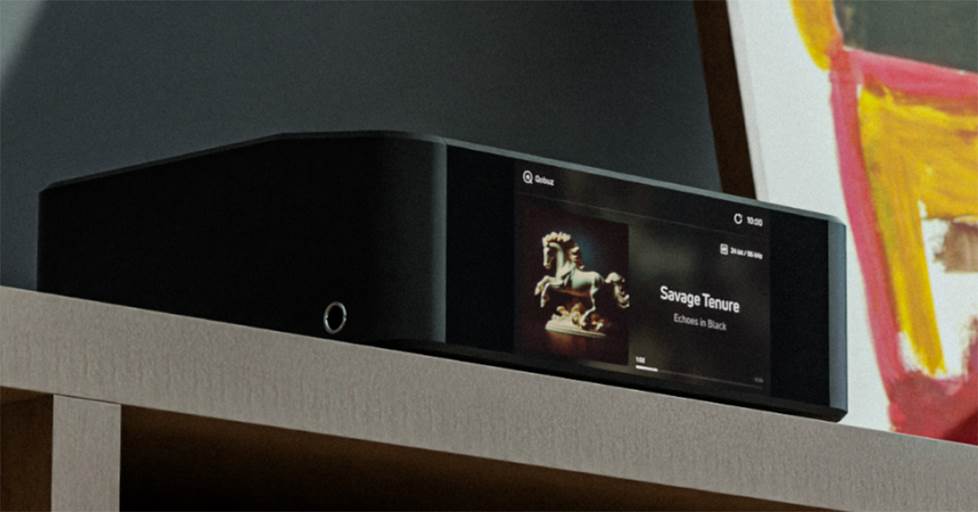
Best high-res multi-room streamer — Bluesound NODE ICON
The relatively new NODE ICON streamer has already made a lot of our customers happy. Like the Cambridge CXN100, it’s got analog stereo balanced XLR for sending a super clean signal to your amp. It also has a full-color display that shows you what’s playing, at what resolution, and other info, although you can’t search through attached media from the front panel controls.
Unlike the CXN100, it has an HDMI eARC port that lets you connect your TV as a source. And of course, it lets you expand into a wireless multi-room sound system if you’ve got or plan on getting other BluOS players.
Our customers have made the NODE ICON very popular in a very short time. It packs a ton of features into a relatively compact chassis at a price point that is definitely one of the keys to its success.
The main ingredient though is the top-notch sound quality, which is built on the same ESS SABRE ES9039Q2M DAC chipset used in the NODE NANO. The ICON uses two of them in dual-mono configuration for super-smooth and precise sound.
Details
- two ESS SABRE ES9039Q2M DAC chipsets in dual-mono configuration
- built-in dual-band Wi-Fi and two-way Bluetooth with high-fidelity aptX Adaptive audio coding
- supports Qobuz, Pandora®, Spotify Connect, TIDAL Connect, internet radio, and more
- works with Apple AirPlay 2
- works as a Roon player (requires subscription and Roon Core running on your network)
- 5” full-color display shows album art and track info
- multi-room expansion with Bluesound/BluOS wireless speakers and components (up to 64 zones)
- analog stereo balanced XLR and unbalanced RCA outputs, optical and coaxial digital outputs
- inputs include analog stereo RCA line-level, optical digital, USB-A, USB-C, and HDMI eARC
- built-in THX AAA headphone amplifier with dual 1/4" outputs
- plays MP3, AAC, WMA, OGG, FLAC, MQA, ALAC, WAV, AIFF, and other file formats
- 3.5mm 12-volt trigger output
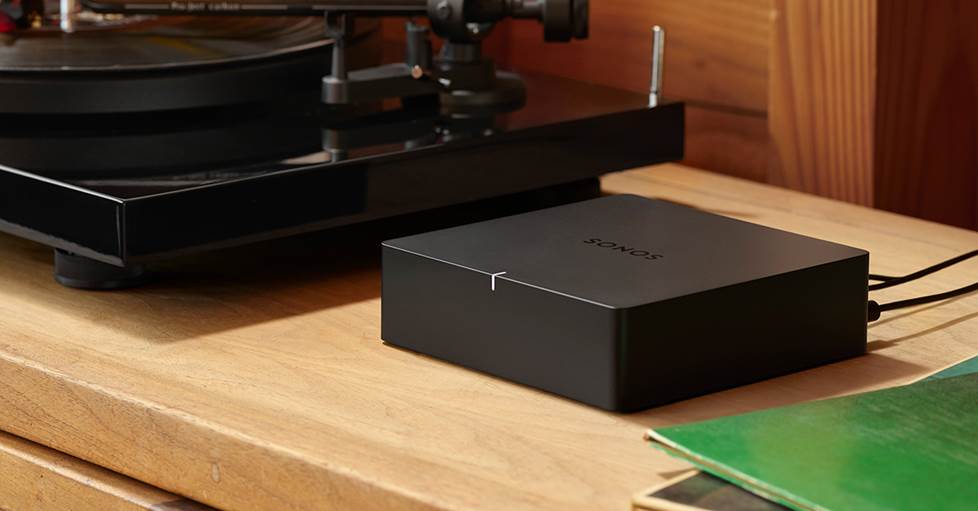
Best for Sonos Users — Sonos Port
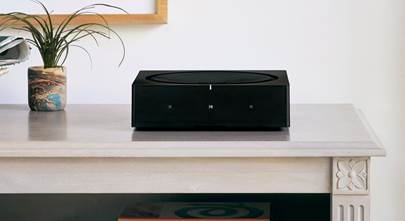
Sonos pioneered wireless multi-room audio. If you’re one of the millions of people who use or want to use Sonos to control music throughout your house, the super-compact Port gives you a simple way to integrate an existing hi-fi system. Just use either the analog stereo RCA or optical digital output to connect to an audio input on your amp or receiver and you’re good to go.
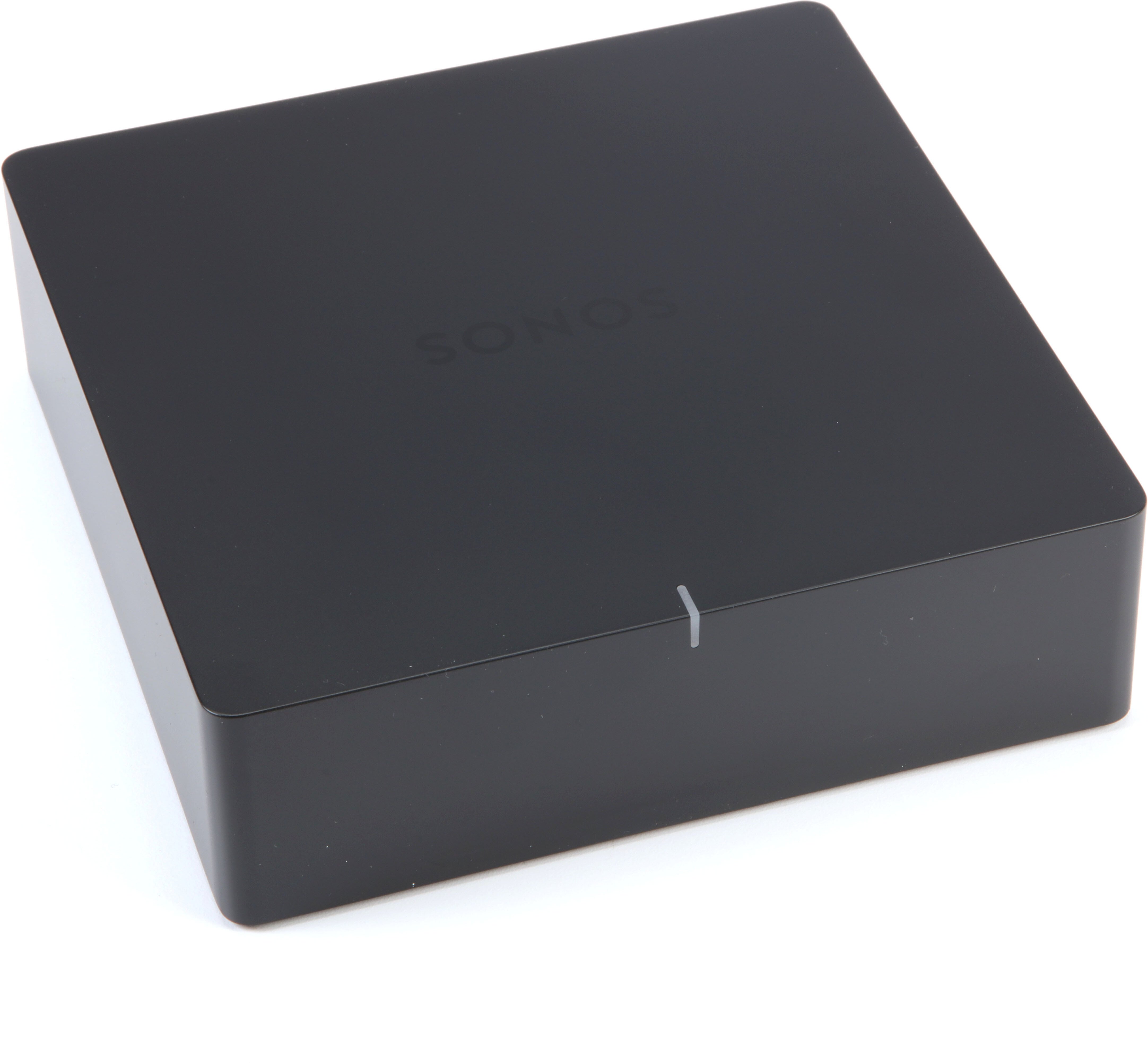
Another cool thing is that it has an analog RCA input that lets you connect a source like a CD player or even a turntable with a phono preamp. So it gives you a way to bring the tactile world of vinyl or CDs into the wireless realm of your Sonos whole-home sound system.
Details
- built-in DAC supports up to 24-bit/48kHz resolution
- communicates with other Sonos players via Wi-Fi or a dedicated Sonos wireless network
- supports Spotify, Apple Music, Rhapsody, Pandora , TIDAL, and more
- works with Apple AirPlay 2
- sleek, small-footprint design
- analog stereo RCA output, optical digital output; analog stereo RCA input
- plays MP3, WMA, AAC, WAV, FLAC, AIFF, ALAC, Ogg Vorbis, and WAV files
- 3.5mm 12-volt trigger output
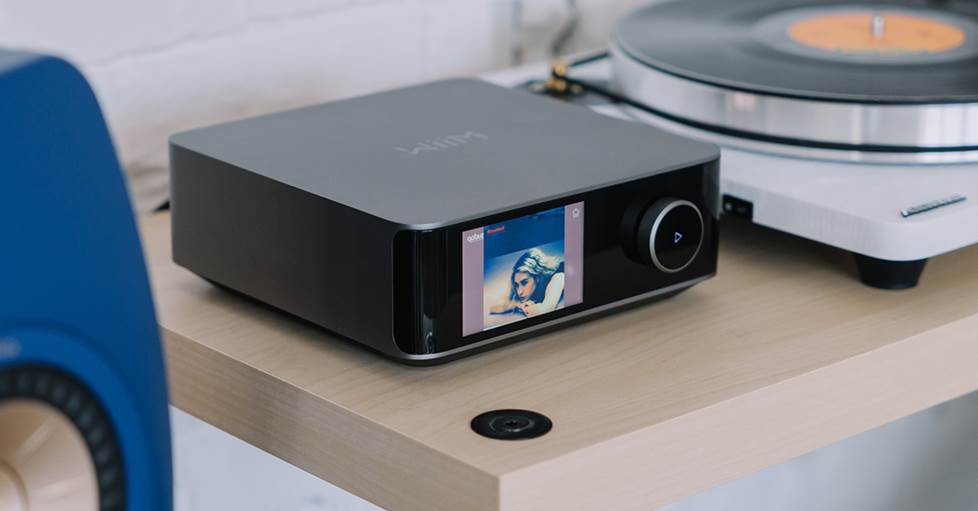
Best user interface — WiiM Ultra
The compact WiiM Ultra lets you add high-res streaming to pretty much any sound system using WiiM's powerful, user-friendly app. Whether you control it from the front panel or your smartphone, great sound is always at your fingertips.
Our customers and I love how easy it is to set up with the free app. Other user-friendly control options include the customizable touchscreen display that can show album art and track info. And for changing settings quickly, you can just tap the screen to change input and output. You can play music from your most recently played list, change the display, and more without opening the app or using the remote.
The remote is super-userful too. It lets you control playback, access presets, and can even be set up to take voice commands from Alexa or Google assistant.
The Ultra's high-performance ESS SABRE™ DAC circuitry delivers rich, detailed sound that rivals streamers costing several times more, so you can get the best out of music services like Qobuz, TIDAL, Spotify, and more.
This streamer can also be part of a multi-room music system that allows you to add digital and analog sources with ease — even a turntable — thanks to its analog-to-digital (ADC) chip. And it all fits into a sleek, compact aluminum chassis that you can place almost anywhere.
Details
- audiophile-grade circuitry includes ES9038Q2M ESS SABRE® DAC
- built-in tri-band Wi-Fi 6E (802.11ax)
- supports Qobuz, Pandora®, Spotify Connect, TIDAL Connect, internet radio, and more
- two-way Bluetooth can wirelessly receive audio from compatible devices and send audio to compatible headphones and speakers
- works as a Roon player (requires subscription and Roon Core running on your network)
- sleek compact design with 3.5" full-color touchscreen
- multi-room expansion with other WiiM components
- Wired analog stereo RCA output, coaxial and optical digital outputs, USB-A input, line-level analog stereo input
- Analog stereo RCA phono input for turntables with moving coil or moving magnet cartridges
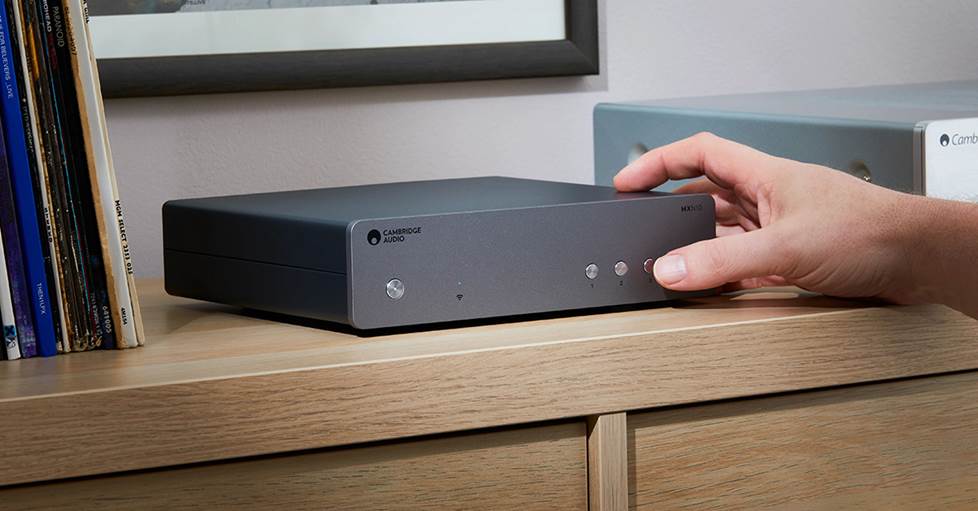
Best compact hi-fi streamer — Cambridge Audio MXN10
The MXN10 from Cambridge Audio is a stealthy, half-width streamer with big hi-fi capabilities. Its high-performance DAC wrings articulate detail from digital music files with its 32-bit/768kHz decoding. And the control interface — Cambridge's free StreamMagic app — is one of my favorites for its user-friendliness.
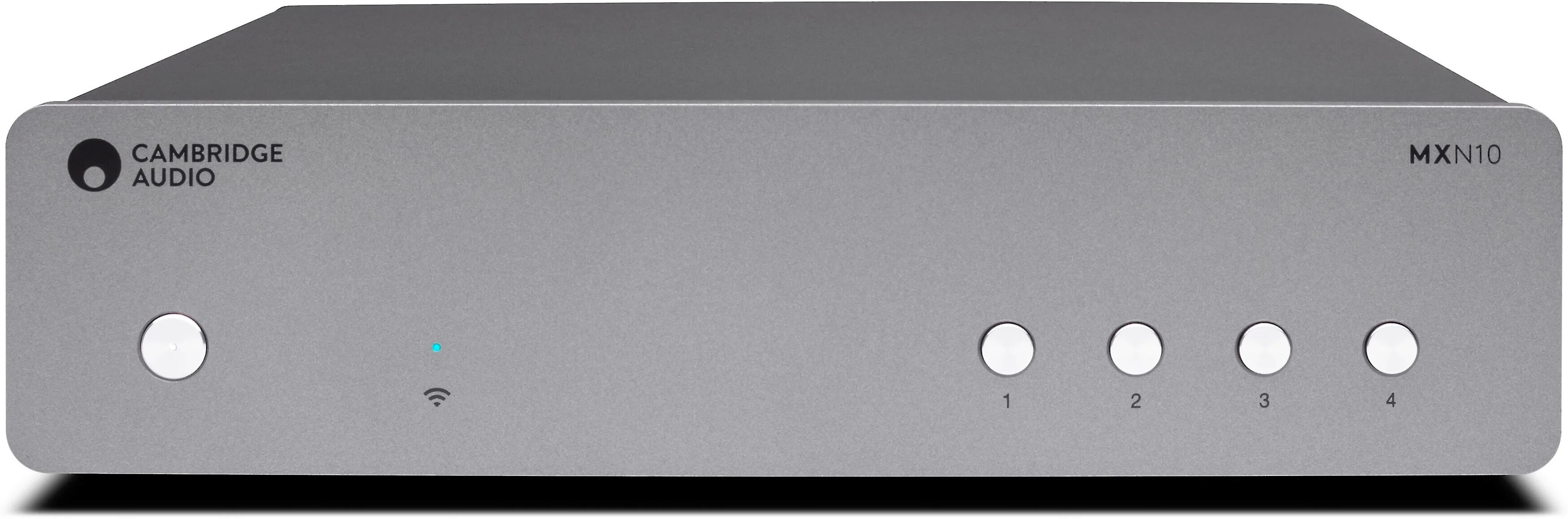
It gives you several ways to access and control your music, including support for popular internet streaming services. You can also play local tracks stored on a NAS drive or a thumb drive connected to the rear-panel USB input. And you can use the app to assign internet radio stations, playlists, albums, or songs as presets, then call them up easily using the buttons on the player's front panel.
The MXN10 also supports Google Cast and Apple AirPlay 2 for easy access to even more streaming content. And built-in Bluetooth gives friends and family an easy way to connect wirelessly and play music using a compatible smartphone, tablet, or computer.
Details
- ESS SABRE ES9033Q DAC supports up to 32-bit/768kHz resolution and AC
- built-in dual-band Wi-Fi and Bluetooth 5.0
- free StreamMagic control app for Apple and Android devices supports Qobuz, internet radio, and more
- works with Apple AirPlay 2 and Google Cast
- works as a Roon player (requires Roon subscription and a Roon Core running on your network)
- supported audio formats include ALAC, WAV, FLAC, AIFF, DSD, WMA, MP3, AAC, HE AAC, AAC+, and OGG Vorbis
Need more details before you choose?
If you have questions about any of these streamers or want to hear about other options for making hi-fi streaming part of your sound system, contact us here at Crutchfield.
And remember, every Crutchfield purchase includes free lifetime tech support.
Popular questions customers ask
In addition to standalone network streamers, you can also get streaming capability in some integrated amps, stereo and home theater receivers, and powered speakers.
Network streamers allow you to wirelessly stream from online music services like TIDAL, Spotify, Pandora, and many others, or from network-attached storage (NAS) drives connected to your local Wi-Fi network.
As long as your smartphone, tablet, or whatever device you're playing music from is connected to the internet, you can control your network streamer(s). Bluetooth, on the other hand, has a limited control range. You can also stream at higher audio resolution with Wi-Fi than you can over Bluetooth.
Ethernet is more stable than Wi-Fi for connecting to your home network. You also get higher audio resolution with Ethernet (up to 32-bit/384kHz) versus Wi-fi (up to 24-bit/192kHz resolution).
Some streamers have onboard control. But even for the ones that do, the most common way to control them is via app on your smartphone, tablet, or other device. There are different apps for different streamers. Some streamers also have remote control options. Some even have voice control but require a Google or Alexa enabled device.
All digital audio has to go through a digital-to-analog converter (DAC) to produce sound. Most streamers have onboard DACs. Any streamer with a built in DAC will have analog outputs. Streamers that don't have an analog output require an outboard DAC.

mobilee.jpg)

Comments (0)