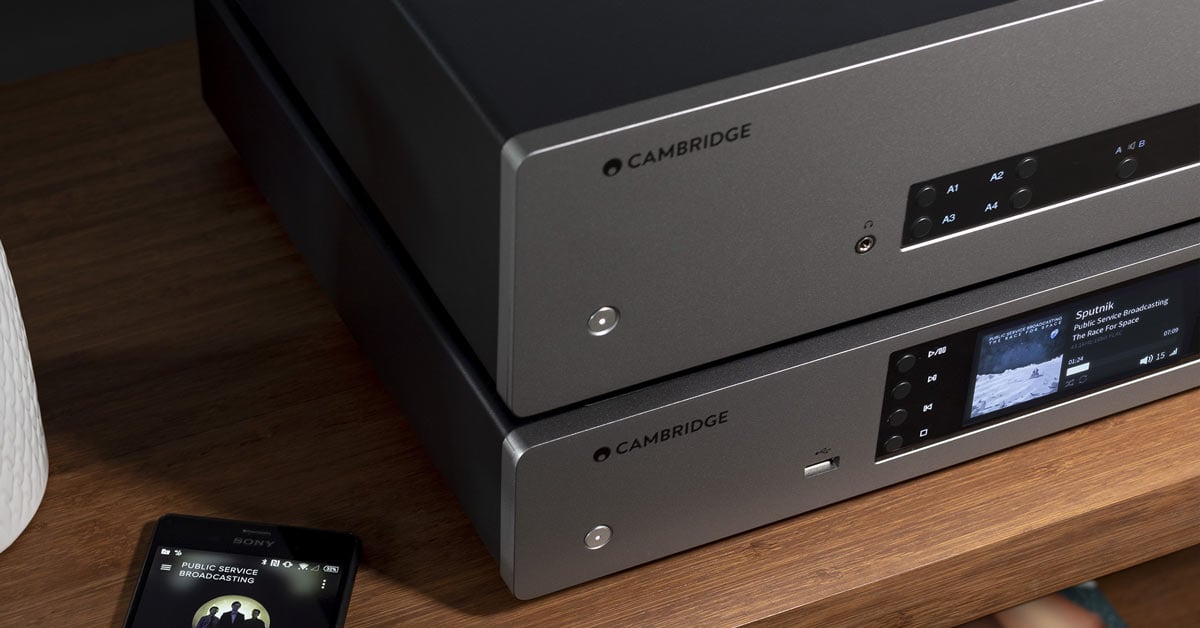
Best integrated amplifiers for 2026
How to choose the right integrated amp for your stereo system

In this article: I’ll provide shopping tips to help you find an integrated amplifier with plenty of power and connections for your stereo system.
And I’ll recommend six of the best integrated amplifiers we carry...
- Best value — Cambridge CXA81 Mk II
- Best for audiophiles — McIntosh MA252
- Best for wireless streaming — NAD Masters Series M10 V3
- Best desktop amp — NAD D 3045
- Best for vinyl lovers — Marantz Model 30
- Best for playing high-res music files — HiFi Rose RS520
...with links to hundreds of customer reviews.
I
f you're like me — a music lover who prizes sound quality — you may want something with a little more "pep" for your audio than a Bluetooth speaker or headphones. Those are great for convenience, but they don't always have the detail you're looking for. You may want to consider an integrated amplifier for the centerpiece of your audio setup.
An integrated amp is the right choice if you want to connect all your music sources to a dedicated two-channel amplifier. Whether it's physical components like CD players or turntables, or wireless sources like music streaming services, there's an integrated amp out there for you. Some even hook up to your TV via HDMI for awesome stereo sound.
We'll go over everything these versatile amps can do, and help you narrow down your choices until you find the perfect one for your sound system.
What is an integrated amplifier?
An integrated amplifier is actually two components in one:
- A power amplifier, which generates the wattage needed to drive your loudspeakers
- A preamplifier that accepts the inputs from all of your music source components
The preamp lets you switch between wired and wireless sources and control the volume. The preamp may also include balance and tone controls. The built-in power amp lets you drive one or two pairs of bookshelf or floor-standing speakers.
Integrated amp vs. receiver
Traditionally, an integrated amp didn't have a built-in tuner to "receive" conventional radio signals, and that would be the main difference from a stereo receiver. However, that's not a guarantee these days, since some integrated amps have tuners, like the Technics SU-GX70.
If an integrated amp can have much of the same functionality as a stereo receiver, what is the real difference, then, especially since integrated amps tend to be more pricey? Integrated amps tend to have higher quality components and construction, along with high-output power supplies.
In the end, integrated amps are preferred when musical detail and clarity are a priority. But the lines are becoming blurred with many quality stereo receivers on the market, so prioritize what features are important to you, then decide which direction you want to go.
Integrated amp vs. preamp/power amp
Many music fans prefer a system with a separate preamp and power amp. The benefits of this approach are cleaner sound — because power can introduce noise into preamp circuitry — and more flexibility in building and upgrading a high-end system.
The drawbacks, naturally, are the higher cost of purchasing two components instead of one, and the necessity of finding space in your entertainment center for two large components. It's worth noting that most integrated amps offer a preamp output that lets you send audio signals to a separate power amp and only use the integrated amp for source switching, so you can reconfigure your system in the future if you want more power.
There's no wrong way to build a system — your unique situation will dictate whether you choose a stereo receiver, home theater receiver, separate components, or an integrated amp. If you've read this far and the integrated amp still sounds like your cup of tea, let's dig into features and specs so you can zero in on the perfect one for your living space.
Integrated amp features
Consider the number and types of connections an integrated amp provides. You'll want to be certain that it can accommodate the components you currently have, or may want to add in the future.
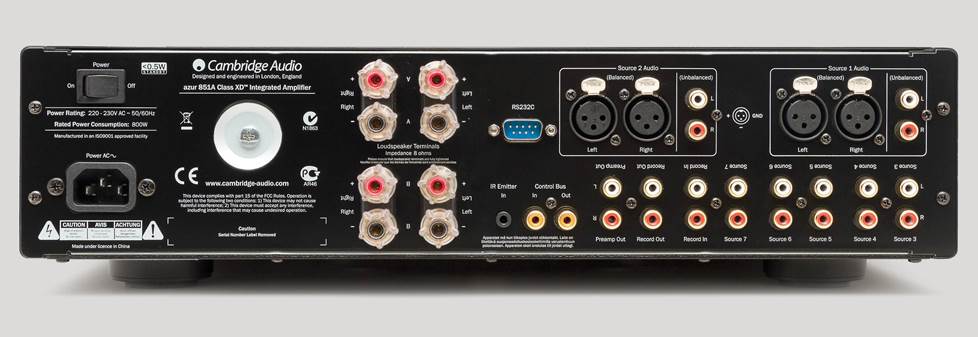
The Cambridge Audio Azur 851A integrated amplifier includes plenty of analog RCA audio inputs. It also includes two pairs of balanced XLR jacks for connecting high-end gear.
Analog audio inputs
Back in the day, analog inputs were the only inputs. Increasingly modern integrated amplifiers have made room for digital inputs and wireless connections to the point it's becoming standard.
That doesn't mean analog inputs are dying out. On the contrary, many music lovers want to use analog components and media they've acquired over the years. They don't want to buy music in the latest format, like a digital download if they already own it in vinyl or on CD. Cue the audiophile saying, "How many times do I have to buy The White Album?"
Turntables have made a big comeback over the past decade. Some would argue they never left. If you're a vinyl lover, you'll want a phono input, for instance. If you prefer to use an outboard phono preamp, you'll need to plug it into your integrated amp via a standard RCA input. And additional RCA inputs come in handy for adding a standalone DAC, a cassette deck, or the analog output of a CD player.
Some high-end sound systems use balanced XLR connections that offer superior noise rejection. If any of your other components offer XLR inputs and outputs, you can connect them using high-quality XLR cables.
If you're an analog purist, many integrated amps offer an analog mode that shuts down all digital circuits. And some integrated amps — the NAD C316BEE, for example — go old-school and offer only analog connections.
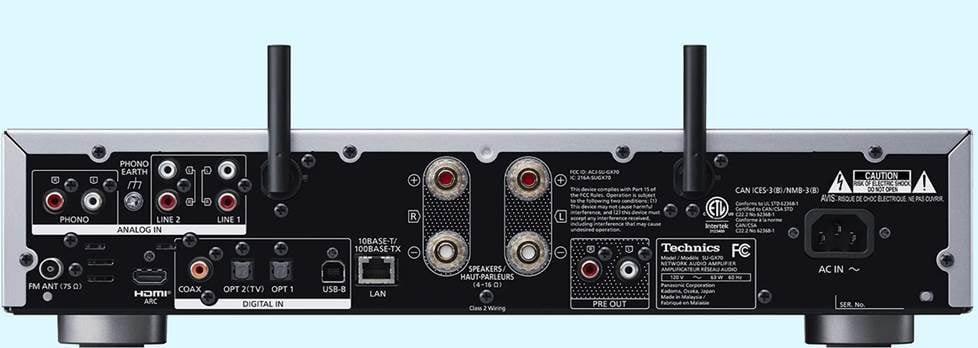
This Technics integrated amp provides analog and digital audio inputs, plus a USB connection for your computer.
Digital audio inputs
Increasingly, integrated amplifiers include a built-in digital-to-analog converter (DAC) that turns digital signals into analog sound your speakers can reproduce. There are a few common types of digital audio inputs:
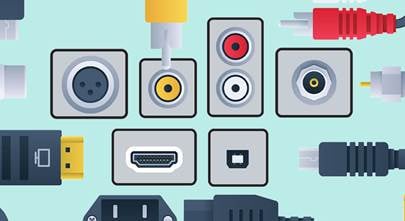
- If your integrated amp has a DAC, you can connect the digital output of your CD player to a coaxial digital input
- An optical digital (Toslink) input offers slightly lower resolution for connecting a CD player or the output of a TV or Blu-ray player
- Music lovers who have high-resolution music files stored on their computers will need a USB Type B connection
- If you use your mobile device or USB thumb drive to store files, look for USB Type A or USB TypeC, but make sure it's an active input and not just a service port for firmware updates
- An Ethernet port is crucial for accessing files hosted on the internet or stored on a network-connected computer or hard drive
- Once upon a time, HDMI ports were strictly for home theater equipment, but they're increasingly found on integrated amps for high-quality TV audio.
Wireless connectivity
It's hard to beat the convenience of wireless streaming when it comes to music listening, and it's becoming standard on more and more integrated amplifiers. Some let you add compatible speakers and components to create an expandable wireless whole-home audio system.
For instance:
- Built-in Wi-Fi allows you to connect to your home's wireless network and access popular streaming services like Spotify, TIDAL, and Amazon HD, plus online internet radio
- Bluetooth lets you stream music wirelessly from apps on your smartphone, tablet, or computer
- Apple AirPlay 2 is designed to work specifically with an iOS device like an iPhone® or iPad®
- Google Cast (formerly known as Chromecast) is designed to work specifically with Android™-compatible devices
- Multi-room streaming platforms like HEOS, BluOS, Sonos, or DTS Play-Fi allow you to create a whole-home audio system by wirelessly connecting to compatible sound bars and speakers
As you can see, there are a lot of ways to listen to music, and you should look for an integrated amp that can give you access to all of your favorite sources.
Outputs
Inputs are crucial to getting what you need out of your integrated amp, but don't overlook the output possibilities, either:
- A headphone jack (1/4-inch or 3.5mm) provides a great way to enjoy your music without disturbing others
- A subwoofer output lets you connect an optional powered sub to supplement your system's bass output
- A stereo preamp output gives you an easy way to add a new power amp to your system. This is handy if you move your system to a larger room or buy new speakers that need more power
- A + B speaker connectors offer an easy way to connect two pairs of speakers, or bi-wire a single compatible pair
Our top picks for 2026
Now that we know what to look for, we can single out some of the best integrated amps for specific applications. Here are some of our favorites.
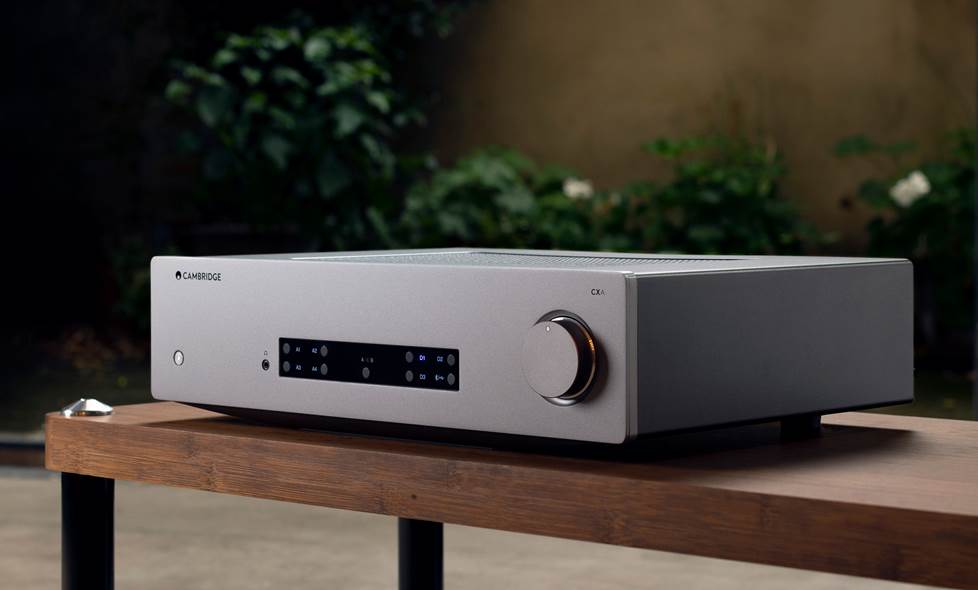
Best value — Cambridge CXA81 Mk II
I'm a big fan of the Cambridge CXA81 Mk II. It offers plenty of power — 80 watts per channel — plus the detail you want when listening to your favorite tracks. Those watts are generated by a power supply that employs an audiophile-grade toroidal transformer for plenty of steady, low-noise current. And it has analog and digital inputs for connecting your favorite sources, including balanced XLR connections.
The amp's built-in high-performance ESS Sabre ES9018K2M DAC ensures that sound from connected digital sources is clean and accurate. It offers convenient Bluetooth connectivity, too. And it has a classy brushed-aluminum front plate, which looks super-sharp in an entertainment center or equipment rack.
Details
- 80 watts x 2 channels into 8 ohms (120 watts x 2 channels into 4 ohms)
- 4-ohm capability allows use with a wide range of speakers
- toroidal power transformer for low noise and high-current output
- Bluetooth with aptX® HD encoding provides high-quality music streaming from compatible devices
- coaxial digital, USB Type-B, and dual optical digital inputs
- balanced XLR and unbalanced RCA inputs
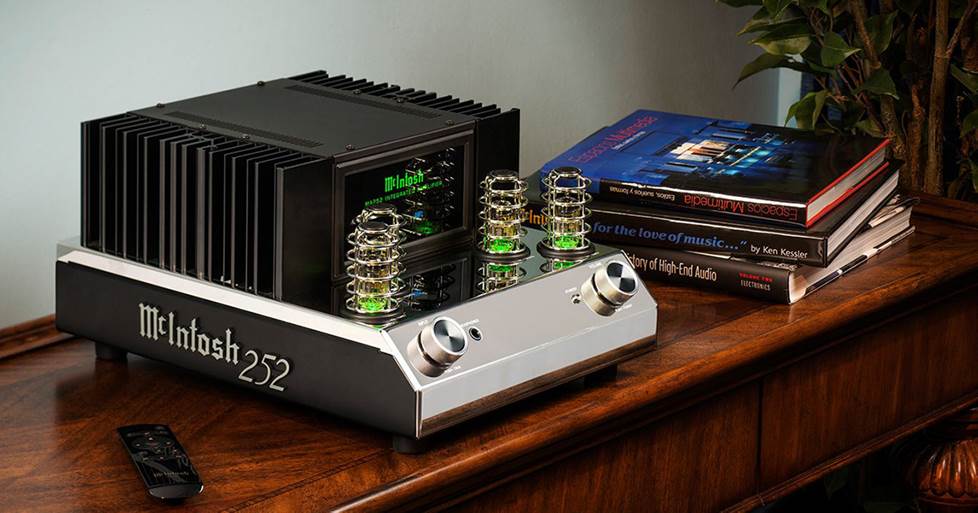
Best for Audiophiles — McIntosh MA252
This isn't the first time the words "best," "audiophile," and "McIntosh" have appeared together, and it surely won't be the last. This venerable American company has been making exquisite hi-fi equipment since 1949, and the MA252 is one of their finest efforts. It's sophisticated, powerful, and elegant.
There's no denying how gorgeous it looks, especially when its tubes are glowing. McIntosh's Hybrid Drive™ technology combines a vacuum tube preamplifier for musicality and warmth with a solid-state amplifier section that delivers formidable power. And its large transformer and multiple filter capacitors provide ready reserves of current to give your music lifelike detail and dynamics.
The MA252 is strictly analog, with a balanced stereo XLR input, a pair of line level RCA stereo inputs, and a dedicated phono input. But that doesn't mean you can't use it to amplify your digital sources. Connect your favorite network streamer. Or add the MDA20 DAC or McIntosh's amazing MB25 Bluetooth transceiver. It's also got a fantastic built-in headphone amp for private listening.
Details
- 100 watts x 2 channels into 8 ohms (160 watts x 2 into 4 ohms)
- Hybrid Drive technology combines a vacuum tube preamp section and a solid-state power amp section
- two 12AX7a and two 12AT7 vacuum tubes for characteristic warm valve sound
- large power transformer with multiple filter capacitors and regulated power supply
- 1 set of balanced stereo XLR inputs
- 2 stereo RCA audio inputs
- dedicated phono input for turntable with moving magnet (MM) cartridge
- full-sized 1/4" headphone
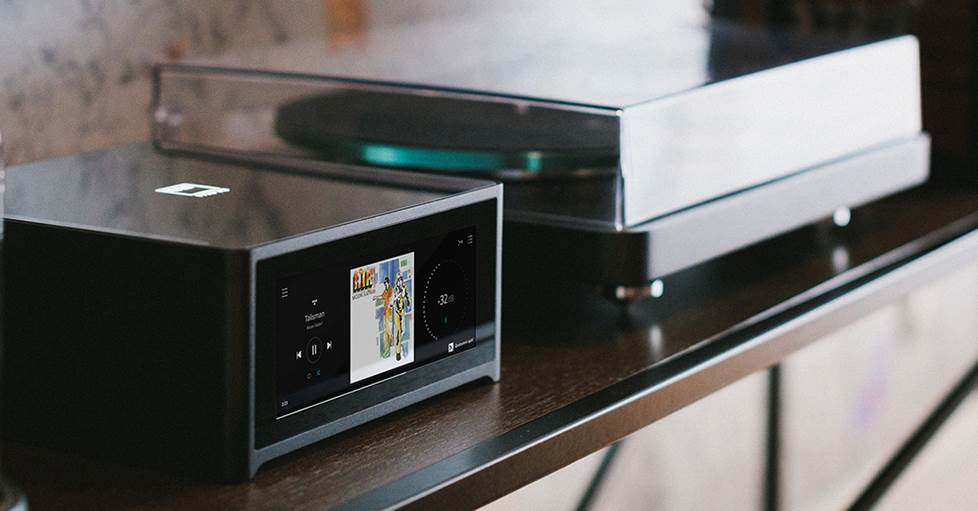
Best for wireless streaming — NAD Masters Series M10 V3
I like the NAD Masters Series M10 V3 here for a couple of reasons. For starters, the BluOS operating system gives you access to popular streaming services, and gives you the functionality to set up a multi-room wireless sound system with the addition of Bluesound wireless speakers. Its built-in DAC supports high-resolution audio files, and it uses NAD's Hybrid Digital NCore Class D circuitry, which runs cool and stays clean while delivering authoritative, dynamic sound.
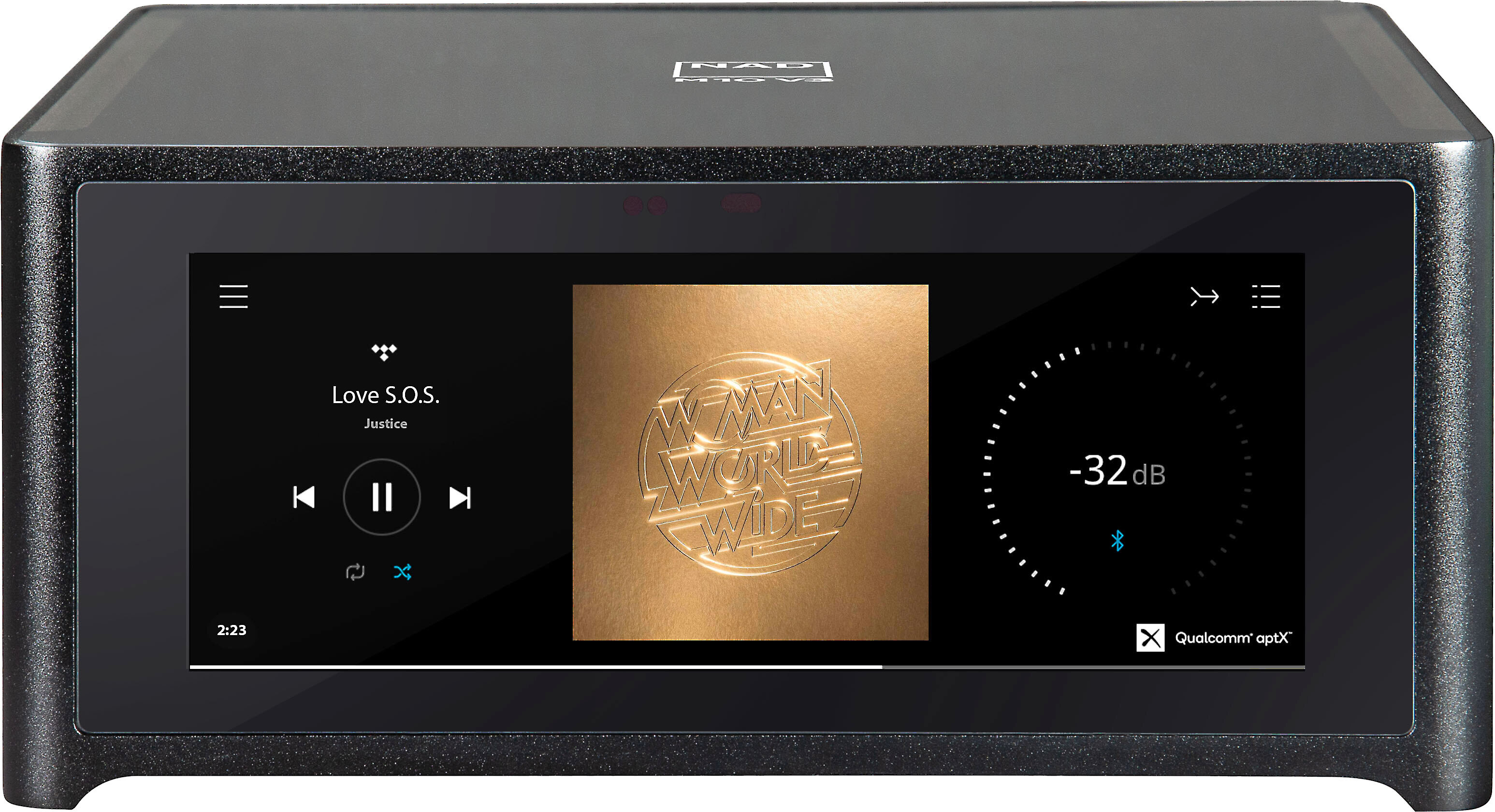
Bountiful digital and analog connections let you connect your favorite sources. If you've got multiple BluOS players in your home, you can stream whatever vinyl you're spinning on a turntable connected to the M10 V3's phono input to any or all of them.
It's even got an HDMI eARC port for TV sound. Add a pair of Bluesound wireless speakers for 4-channel Dolby Digital home theater. To take your audio experience to the next level, use the optional Dirac Live room correction software to perfect your sound.
This amp also works with Apple AirPlay 2, Roon, TIDAL Connect, and Spotify Connect.
Details
- 100 watts x 2 channels into 8 or 4 ohms
- built-in Wi-Fi and Bluetooth
- built-in BluOS for wireless streaming and multi-room audio to compatible players on your network (sold separately)
- supports TIDAL, Spotify, Pandora, Amazon Music, internet radio stations, and more (subscription required for some services)
- works with Apple AirPlay 2, Roon, TIDAL Connect, and Spotify Connect
- built-in ESS Sabre ES9039 DAC supports digital audio signals up to 24-bit/192kHz, including high-res MQA, FLAC, WAV, and AIFF files
- inputs include digital Toslink optical, coaxial, HDMI eARC, USB, and analog RCA — including phono for moving-magnet cartridge
- Ethernet port for connection to your home network
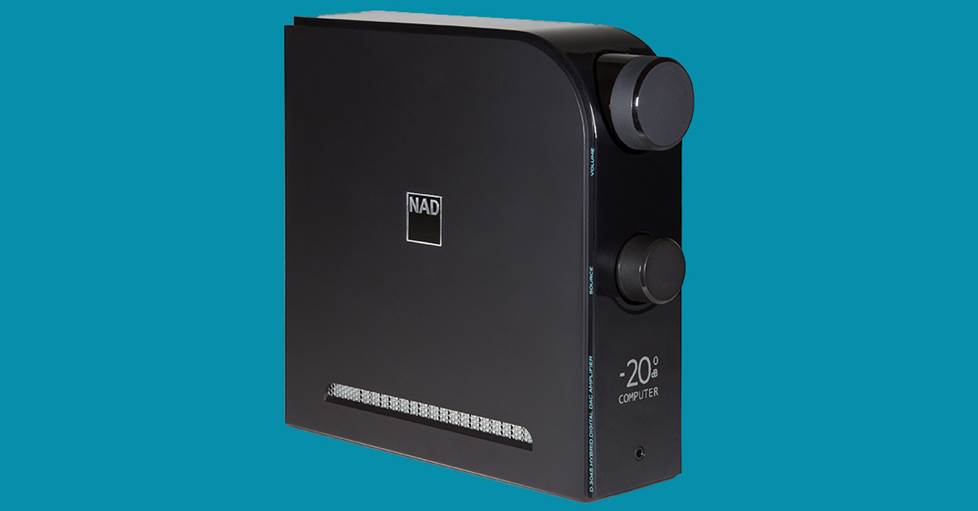
Best desktop amp — NAD D 3045
Since more of us are working from home these days, it makes sense to improve your desktop system, and this is an excellent way to do so. Most integrated amps are designed to lie horizontally on a shelf in an entertainment center, so the NAD D 3045 stands out immediately in that regard — you can place it upright or sideways for the best fit in your setup.
It's amazing how much functionality NAD has packed into this space-saving chassis. There's a USB-B input for your computer and an HDMI ARC input for your TV. You also get a phono input as well as an unassigned RCA input pair. One coaxial and two optical inputs let you connect a wide range of digital sources. And it's got two-way Bluetooth for wireless streaming to the amp or from the amp to a pair of compatible headphones.
Details
- 60 watts x 2 into 8 ohms
- compact, low-profile design allows vertical or horizontal orientation
- built-in 24-bit/384kHz digital-to-analog converter
- two-way Bluetooth with aptX® encoding for streaming music from compatible devices and to wireless speakers or headphones
- asynchronous Type-B USB input for connecting a computer and HDMI ARC input for TV
- 1 pair of analog stereo RCA inputs
- 2 optical digital and 1 coaxial digital inputs
- phono input for connecting a turntable with a moving magnet (MM) cartridge
- stereo RCA preamp/subwoofer output
- built-in headphone amplifier with 3.5mm minijack output
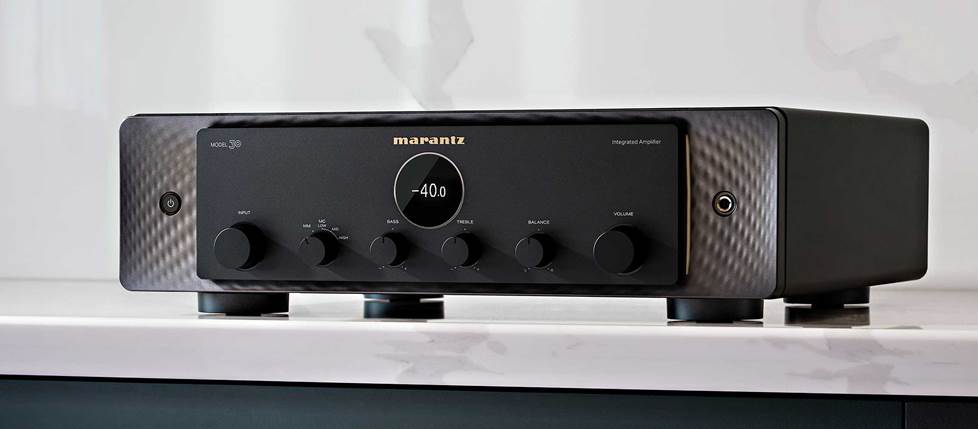
Best for vinyl lovers — Marantz Model 30
I've seen a few integrated amps with the ability to accommodate turntables with moving magnet or moving coil cartridges, but the phono stage built into the Marantz Model 30 goes the extra mile. They included a front-panel knob that allows you to adjust impedance to match a low-, medium-, or high-output cartridge, which gives you a lot of versatility without having to add an outboard phono preamp.
It delivers 100 watts per channel into an 8-ohm load, and it's 4-ohm stable, thanks to a high-current double-shielded toroidal power transformer. Marantz's Hyper Dynamic Amplifier Module (HDAM® SA3) delivers pinpoint accuracy and control under high-drive conditions. And to really gild the lily, Marantz's Sound Master spent hours testing and tuning the Model 30's output to ensure that it reveals exquisite detail and musicality.
Details
- 100 watts x 2 channels into 8 ohms (200 watts x 2 into 4 ohms)
- separate phono input with high-grade RCA terminals for turntables with moving magnet and moving coil cartridges
- adjustable impedance for low-, medium-, and high-output MC cartridges
- Source Direct mode bypasses tone control circuits for cleaner sound
- high-current double-shielded toroidal power transformer for smooth handling of demanding speaker loads
- Sound Master tuning reveals exquisite detail and musicality
- 4 standard stereo RCA audio inputs
- dedicated CD input with high-grade RCA terminals
- front-panel full-size 1/4" headphone jack
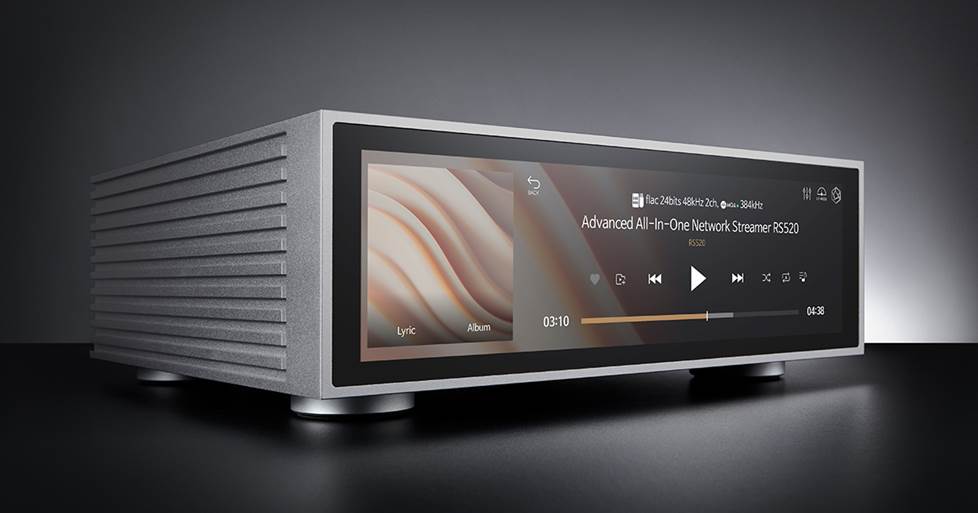
Best for playing high-res audio files — HiFi Rose RS520
I'm differentiating this from our streaming champ above — I'm choosing the beautiful and powerful HiFi Rose RS520 for its facility with high-resolution audio files downloaded to a computer or external hard drive, or encoded on a compact disc.
It's also a 4K video streamer with a stellar 12.6" full-color touchscreen that uses an Android-based operating system for easy app-based navigation. And its got top-notch build quality: four sides of its sturdy aluminum chassis are constructed as a single piece to resist vibrations and protect the first-rate internal circuitry.
It has multiple digital inputs, which benefit from the built-in high-performance ESS Sabre DAC. It's compatible with all of the file formats audiophiles favor, and it can absolutely do justice to your analog and streaming sources, too.
Details
- 250 watts x 2 channels into 8 ohms or 4 ohms
- premium ESS Sabre DAC with up to 32-bit/768kHz resolution
- compatible file types: MQA, WAV, FLAC, AIFF, WMA, MP3, OGG, M4A, and more
- 4K video streaming
- supported video formats include ASF, AVI, MKV, MP4, WMV, MPEG-1, MPEG-2, MPEG-4, and more
- dual-band Wi-Fi and Bluetooth with included USB dongles
- Apple AirPlay
- Toslink optical and coaxial digital inputs
- USB Type B audio input for connecting a computer
- USB Type-A input for digital sources like thumb drives, NAS drives, and computers
- analog stereo RCA input
- HDMI eARC port for playing TV sound
- Ethernet port for making a wired connection to your home network
Need help deciding?
Our friendly, knowledgeable Advisors can help you narrow down your choices to find the perfect integrated amplifier for your unique circumstances. Contact us today.
And don't forget, free lifetime tech support is included with your Crutchfield purchase.
Popular questions customers ask
An integrated amplifier is two components in one ù a power amp that drives your speakers and a preamplifier for your music source components. The preamp lets you select your sources and control the volume. An integrated amp is similar to a receiver, except it doesn't have a radio tuner built in.
A good rule of thumb is to stay within the power range of your speakers but look toward the upper end of that range. More power is a good thing ù it gives you stronger bass and clearer, louder sound, especially in larger rooms.
Yes! There are a few ways you can do that. Most of our integrated amplifiers have a dedicated "phono" input for hooking up your turntable directly. You can also use a separate phono preamp to connect a turntable to any standard audio input. And some turntables have a phono preamp built in, so you don't need a special connection on your amp.
Some integrated amplifiers have built-in Bluetooth or Wi-Fi for streaming music from your phone or other device. Streaming directly to your integrated amplifier over Wi-Fi is a solution we love ù the music doesn't stop if you carry your phone into another room. WiFi equipped integrated amps also offer built-in support for popular music services like Spotify and Qobuz, and some even let you stream music to compatible speakers or components in other rooms.
Yes. You can connect a TV to your integrated amp just as you would another audio source. This will give you much better sound than your TV's built-in speakers. A select few integrated amps have HDMI inputs for hooking up a TV, but you'll find more options with optical digital inputs that can be used for this purpose.


Rock
Posted on 5/19/2026
Good evening. My daily drivers are the Polk RTA 11t powered by a Sansui G7700 that has been refurbished. I do enjoy the Polk but am considering a modern upgrade in amplification. The Cambridge CXA81 is in my price range and something I have been considering. Do you have any experience with the vintage Sansui's of that era and how it may compare to the Cambridge? We tend to listen a lower volume/background music like jazz, classical guitar and smoother indie and instrumentals. Currently the Sansui/Polk fill the air well. I will say I am not a fan of Yamaha amp although I have one in my office. Thank you for any input.
Mark C from Norristown, PA
Posted on 2/28/2026
I am curious. Just so I am clear, the Rose Rs520 doesn't stream or decode DSD? That is surprising to me.
Athena H. from Crutchfield
on 4/7/2026
Stuart Weiner
Posted on 12/25/2023
Arcam A15 vs SA20. Hi. I'm considering these to replace a vintage Denon 80watt integrated that still does a great job with my Rega3, Rotel CD11 Tribute, Pro-ject Evo Carbon, Ascend Sierra 1 setup. Just don't know how much longer it can last. Which of the two Arcams would you recommend? What else should I be considering? Thanks! SW in KS
Ned O. from Crutchfield
on 12/26/2023
Sue & David
Posted on 12/25/2023
What integrated amp or stereo receiver would be a good match to power 2 pairs of Klipsch RP -8000f ll speakers rated at 150 watts RMS. Will be streaming music via Ethernet or coaxial input
John Mackey from Chicago
Posted on 10/2/2023
Is the Yamaha AS1200 a good fit for running Klipsch Heresy3's?
Ned O. from Crutchfield
on 10/5/2023
Tom
Posted on 5/21/2023
Hi Which would you consider an audiophile grade low profile integrated amp (or amp without a preamp, already have one), specially for turntables but can also have optional BT / Airplay support and digital coax and/or optical inputs, minimum 2x 70 watts 6ohms for small to medium sized room (main bedroom)? I plan to connect with Q Acoustics Concept 30 speakers. Thanks!
Eric A. from Crutchfield
on 5/22/2023
Toby Bass
Posted on 3/2/2023
Trying to locate a nice integrated amp to precisely push the Definitive Technology BP-9040 speakers for my music listening room. Bluetooth feature as well. Any recommendations?
Eric A. from Crutchfield
on 3/3/2023
Lash
Posted on 3/1/2023
The Mac makes me chuckle. C'mon, guys. You know better than this.
Greg from Ca.
Posted on 3/1/2023
I chose Anthem STR both power amp and the integrated as a pair. @ pair speakers, and think it is an Audiophile grade choice.
Eric A. from Crutchfield
on 3/2/2023
Amador from vallejo
Posted on 2/20/2023
Hello, I have a pair of JBL 250ti speakers and I would like to hear you recommendation as to what amplifier should i consider buying? Thanks in advance.
Eric A. from Crutchfield
on 2/21/2023